
The DevSecOps Gauntlet of 2025: Dodging AI Threats and Keeping Developers Happy
Summary
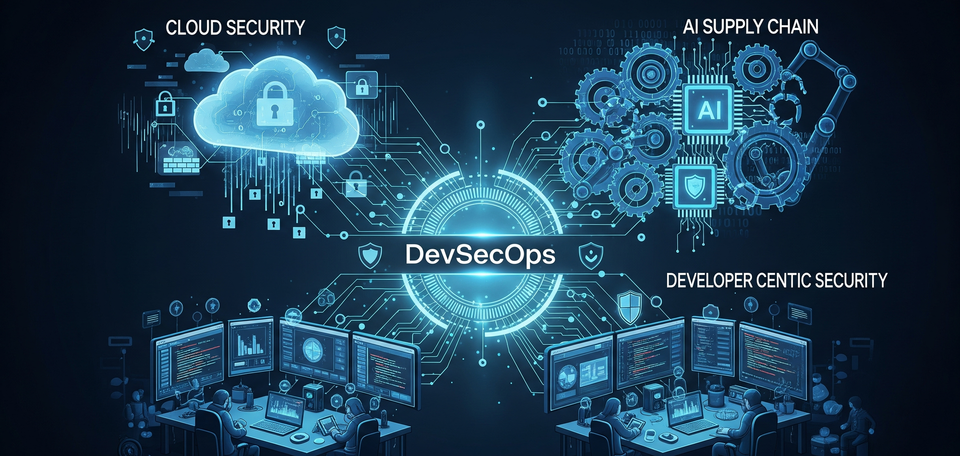
I have been researching the future of DevSecOps, and I’ve found that the ground is shifting faster than ever. As we head into 2025, the old playbook for integrating security is becoming dangerously obsolete. My analysis highlights the convergence of three critical challenges: the rapid growth of cloud-native complexities necessitating unified solutions; the emergence of AI as a new, high-stakes attack vector; and the non-negotiable requirement for a developer-centric security culture. The conclusion is clear: DevSecOps is no longer just about shifting left; it's about a fundamental rewiring of how we build, secure, and innovate. Organizations that treat security as an enabler for developers, rather than a gatekeeper, will not only survive this new gauntlet but will lead the pack in both innovation and resilience. This article breaks down these challenges and offers a path forward.
Introduction: The Game Has Changed
Remember when "DevSecOps" was the shiny new buzzword on the conference circuit? It felt like a utopian vision: developers and security teams, working in perfect harmony, building unbreakable software together. Fast-forward to today, and that vision has been stress-tested by a reality far more complex and chaotic than we imagined.
The central problem I’ve been examining is that the very nature of development has transformed. We’re not just building applications anymore; we’re assembling them from a global supply chain of cloud services, open-source libraries, and now, pre-trained AI models. This has turned our development pipelines into a high-speed, high-stakes relay race.
The objective of this article is to move beyond the buzzwords. I'll deconstruct the core areas where the future of DevSecOps will be won or lost in 2025: the cloud, the AI supply chain, and perhaps most importantly, in the hearts and minds of our developers.

The Cloud Isn't Just a Place, It's a Playground (for Attackers)

The move to the cloud was supposed to simplify things. Instead, for many security teams, it created a sprawling, ephemeral, and often invisible landscape of potential vulnerabilities. The old model of securing a neat, well-defined network perimeter is, to put it mildly, outdated. Trying to use legacy security tools in a cloud-native environment is like trying to put out a forest fire with a water pistol.
This is where I see the rise of Cloud-Native Application Protection Platforms (CNAPPs). Think of a CNAPP as a comprehensive solution for cloud security. It brings together capabilities like cloud security posture management (CSPM) and cloud workload protection (CWP) into a single platform. Why is this important? Because it provides visibility and control across the entire application lifecycle, from code to a running container.
The market is responding to this need for consolidation. Some analysts predict strong growth in the CNAPP market, driven by the need to manage the complexity of cloud security. With many security leaders agreeing that a "shift left" approach is essential, CNAPPs provide a way to empower developers and cloud architects with the tools they need to build securely from the start.
The AI Trojan Horse: Securing the New Supply Chain

If the cloud was last decade's challenge, the AI supply chain is this decade's frontier. We are enthusiastically plugging AI and Machine Learning models into our products, often sourcing them from open-source repositories or using third-party APIs. It’s an incredible accelerator for innovation, but it’s also a potential blind spot. It's a bit like ordering a beautiful cake for a party without asking for the ingredients list. It looks amazing, but you have no idea what it contains.
There are many examples of attackers targeting integrated systems. While not always a direct attack on an AI model, these serve as illustrations of how sophisticated actors target the connections between systems. Now, imagine that connection is an opaque, pre-trained AI model with millions of parameters. The potential for malicious code, data poisoning, or backdoors is significant.
With many organizations increasing their AI investment, this is no longer a theoretical risk. Your new AI-powered feature could introduce unforeseen risks. We are entering an era where scanning container images for vulnerabilities is just the beginning; we will soon need to assess AI models for security and ethical considerations with the same rigor.
The Golden Rule of DevSecOps: Don't Annoy Your Developers

This brings me to the most critical and often overlooked theme: the human element. You can buy the best tools and have the most advanced threat intelligence, but if your security practices bring your development pipeline to a standstill, you've already lost.
For too long, security has been seen as an impediment. A developer finishes their work, only to be handed a long list of vulnerabilities. This isn’t just unhelpful; it's demoralizing.
A truly developer-centric DevSecOps approach flips the script. It’s about enablement, not just enforcement. What we need are:
- Automated Security in the Pipeline: Security checks are integrated into the CI/CD process, running automatically and providing fast feedback.
- Feedback in the Right Context: Vulnerabilities are flagged directly in the developer’s IDE or their pull request, with clear explanations and actionable suggestions.
- Tools That Don’t Get in the Way: Security tools have clean APIs and are designed to integrate smoothly into the existing developer toolchain.
- Training That Resonates: Hands-on, role-specific training teaches developers how to think like an attacker and write resilient code.
When you make security easier and more intuitive, you get engagement. You get a culture where developers take pride in the security of their code.
Synthesis of Insights: It's a Triathlon, Not a Relay Race
The popular analogy for DevSecOps is a relay race. But I think that’s wrong. It’s more like a triathlon. You can't win by being great at just one discipline.
Your cloud security can be excellent, but if your AI supply chain security is weak, you'll fall behind. And if your developer experience is painful and slow, you’ll struggle. These three domains are not separate challenges; they are interconnected parts of a single, modern security strategy. A strong developer experience enables effective cloud and AI security, as developers are on the front lines of implementing these controls.
Implications and the Road Ahead
The implications of these findings are significant. This is no longer just a technical problem for the CISO to solve; it's a strategic business imperative. A breach originating from a compromised AI model is a potential threat to your brand, customer trust, and market position.
This leaves us with some big, unresolved questions. How can we establish a standardized method for evaluating AI models, ensuring we understand what we’re using? How do we measure the benefits of a better developer security experience?
Looking forward, I predict the rise of specialized roles like "AI Security Engineer" and new tools designed to vet ML artifacts. There will be pressure to build security principles into the foundation of computer science and data science education.
Conclusion: Time to Pick Up the Gauntlet

As we navigate the future, the DevSecOps challenge is clear. The challenge is about building a security culture that is as agile, intelligent, and integrated as the technology we are creating. It requires us to master the cloud, address the AI frontier, and support our developers as key players in security.
The organizations that embrace this holistic, developer-centric vision will not only build safer products, they will build them faster and better, turning security from a cost center into a competitive advantage.
What are your biggest DevSecOps challenges? Share your thoughts in the comments below. Let's discuss how we can all work together to navigate this.

Comments ()