
Beyond Jira: The Rise of the GitHub-Centered Operating Model
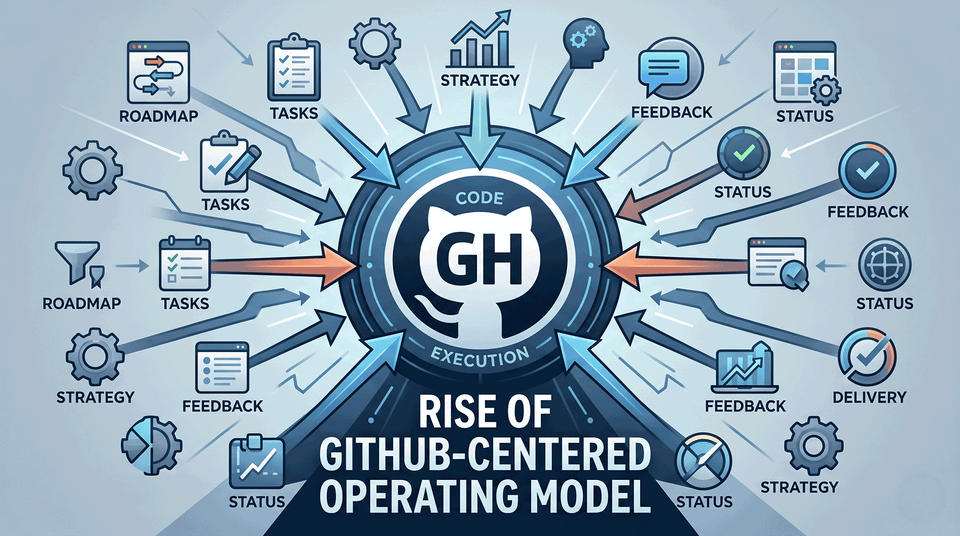
I think a lot of software organizations have a bad habit that they have gotten used to.
Their strategy, customer feedback and delivery status all live in separate tools whilst their code lives in GitHub. They then ask teams to come together and collaborate through meetings, email/screenshot/status updates etc. and hope that they can piece everything together with their memory.
That is not an operating model. That is admin work wearing a nice shirt.
I think the future of product management will be GitHub-centric, and I don’t mean just because teams want to bring product management “into the developer tool”. The reality is that as teams grow in scale, management becomes more risk-averse and less willing to pay the coordination tax required by distributed, independent, and often siloed tools and workflows.
Serious money keeps pouring into platforms that nestle right up alongside GitHub, like Airfocus. Read this: Airfocus bags $7.5M for its take on project management software | TechCrunch, or this: Customer engagement platform Beamer raises $20M.
The disconnect between product roadmaps and codebases has moved from an operational nuisance to a serious risk factor as developers increasingly use generative AI and autonomous agents to support their daily work. It is now common practice called "vibe coding", for AI to produce code that appears correct but violates architectural principles. In order for the software development community to be able to scale its use of AI safely, the community is experiencing a fundamental structural shift towards a unified, code-proximate model referred to as GitHub-native product management. The shift is defined by reducing the gap between the product roadmap and the Git repository so that all stakeholders have access to a single, verifiable source of information for establishing deep strategic context for AI agents. This is the minimum requirement necessary for the adoption of Spec-Driven Development (SDD), which reverses the traditional philosophy of software development; the product specification becomes the most important, persistent artifact, while the code base becomes the disposable, regenerative representation of that specification. With such standards as the Model Context Protocol (MCP) and multi-agent orchestration tools such as GitHub Agent HQ, leaders are empowered to create, manage and utilize autonomous digital worker assets across their entire organization.
In this article, I will explain how this new paradigm is eliminating tool chain barriers and changing the function of Product Managers from being retroactive status report providers to being proactive builders of machine readable specifications.
Subscribe (button at top right) to get these blogs in your inbox, and enjoy additional features!
Introduction
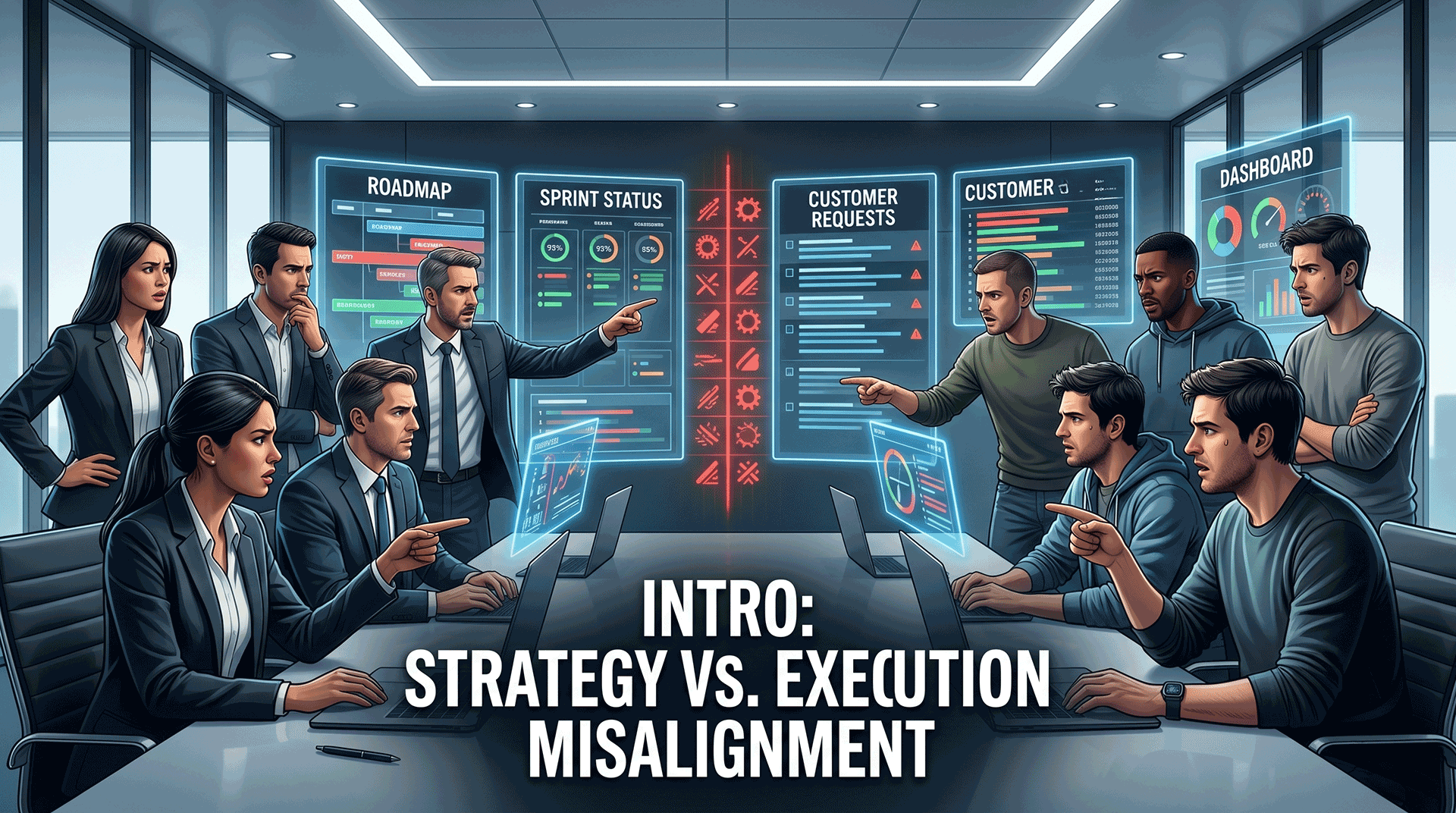
When strategy and execution live in different systems, teams spend too much time translating and not enough time building.
I have sat through enough planning reviews to know when a process has gone sideways.
If you have a roadmap tab, a customer requests tab, a sprint status tab, then someone throws up a dashboard, and now everyone in the room is a detective trying to figure out whether the dashboard is lying - that’s when you know the process is not working. This is completely useless and takes everyone away from actually trying to make product decisions.
It’s easy to ignore the quiet friction that develops between Product and Engineering teams. But that friction has real costs. It slows down delivery over time, and it erodes the trust that underpins the entire organization.
Product expects engineering to deliver on features, but also expects them to thoughtfully evaluate the implications of those features on usage, adoption, and revenue. Engineering feels like they’re only doing half the job when they deliver on time but miss on impact. And the roadmap, once the source of much discussion and planning, becomes stale the moment it is published.
That is why this shift matters.
This blog will explore why GitHub centered development is getting so popular, what that actually looks like, and where managers and executives might go wrong with it. I am explicitly not saying that anyone should try to run a completely GitHub only operation. What I do mean is that using GitHub as your execution backbone, and then intentionally building the rest of your stack around it is a much simpler and more realistic model.
The Source of the Friction: Paying the Coordination Tax
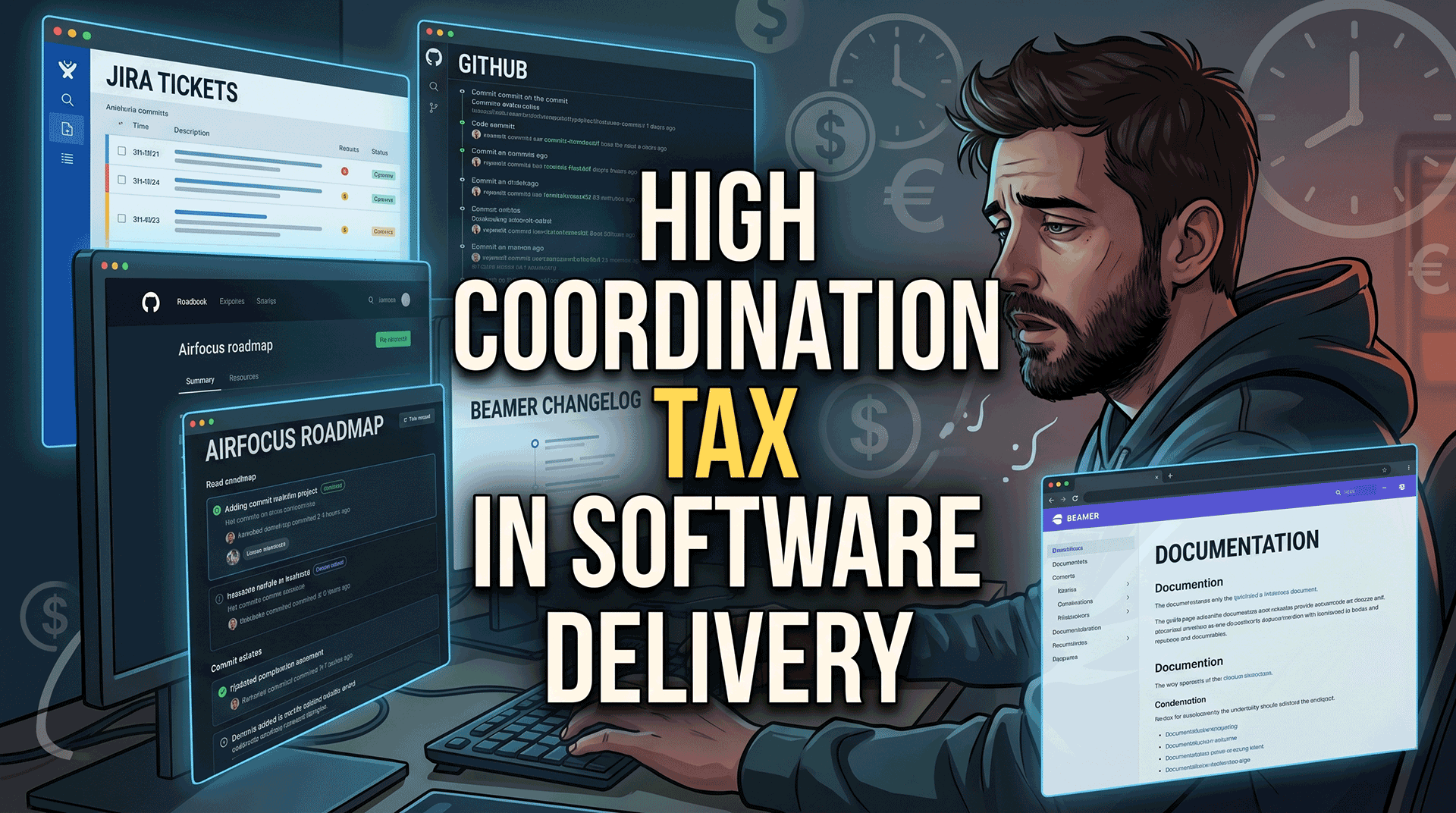
The biggest waste in modern software delivery is not always bad code or bad plans, but the effort it takes to keep disconnected systems aligned.
Every organization pays a coordination tax. The only question is how much.
Status reporting, for so many teams, just becomes this overly complicated, manual data transfer. Someone updates Jira. Another person's fiddling with a roadmap deck, too. All those customer themes then get directly copied into a planning tool by a project manager. Engineering's adding its context in GitHub. Then everyone gathers. They simply must compare what each person believes is truly happening.
That is expensive.
A recent report from DX, drawing on extensive interviews with over 2,100 developers, unveiled something truly astonishing. They lose a full day every single week - all because of utter inefficiency.
Another survey, this one by Cortex, went and polled engineering leaders for their take. What did they find? A staggering fifty-eight percent of those leaders believe their developers squander more than five hours weekly on tasks that simply go nowhere. Why all this lost time? It's the unending struggle to simply gather project context.
That phrase matters. Gathering project context.
Not writing code. Not designing systems. Not reviewing architecture. Just figuring out what is going on.
Onboarding? It is no different. Most leaders claim new engineers require well over a month just to deliver their very first actual pull requests. That specific insight comes straight from Cortex. Some of it is understandable. Software systems are, let's be honest, often a confusing, utterly sprawling disaster. But other problems? We totally brought those on ourselves. When a fresh hire must navigate, say, five distinct platforms simply to grasp the very basics, how can you possibly expect them to get up to speed fast? You simply cannot.
A GitHub-centered workflow is appealing for one simple reason. It promises to cut down the hunting.
Why Now? Three Forces Are Converging
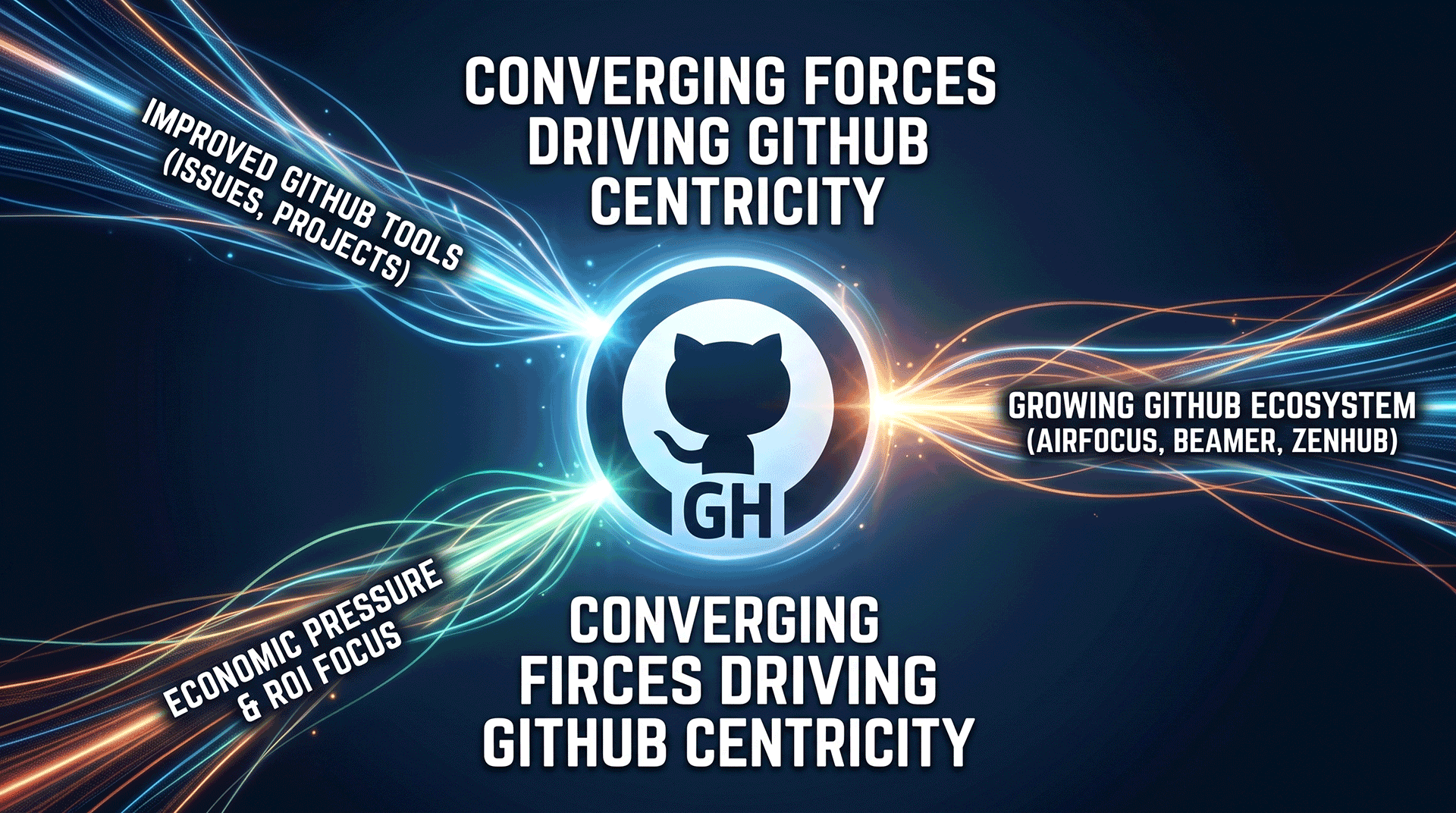
This shift is happening now because the tools changed, the market changed, and management patience ran out.
For ages, we've talked endlessly about genuinely connecting our plans with actual results. But where did those discussions generally go? Many times, absolutely nowhere.
But the expectations are changing now. Why?
Because three things are landing at once.
GitHub's really taking off. It's not just a place for code anymore. Its Issues and Projects features have gotten so much better lately. GitHub quickly transforms into the main spot for handling every single piece of engineering work. Their own roadmap is put out there for all of us to see at GitHub public roadmap · GitHub, and it promises big features. What is really interesting in their roadmap is that they simply do not see planning as some separate thing from actually finishing the job.
GitHub's ecosystem is also really getting good. You wouldn't even see it happening, though, especially if your gaze stays fixed solely on those same tired, traditional project management tools everyone’s always used.
Newer companies aren't dragging their teams away from GitHub; Instead, they're simply building directly on its foundation.
Modern Product Management tools are really good nowadays. See Airfocus bags $7.5M for its take on project management software. That really proves how much folks crave an intelligent method for connecting vital elements, like company goals and crucial key results, straight into what engineers are constructing day by day.
Also, check this out: ZenHub adds roadmapping to its GitHub project management tool. Those guys were way out front, bringing project management directly into the GitHub experience.
Another Trend: Customer engagement platform Beamer raises $20M highlights the next major movement. It's all about linking everything developed back to those public announcements, keeping track of changes in logs, and, yes, absolutely gathering user feedback.
This isn't a winner-takes-all story. It's more like the gravitational pull of GitHub is forming at the center, and tools are adjusting their orbit accordingly.
Third, the economics of the environment evolved significantly. Naturally, the tone of conversation from organization leaders has become much more stringent, and they are demanding a greater understanding of the ROI of the array of tools and techniques at their disposal.
The basic problem at play here is that multiple complex systems which serve essentially the same purpose - developing software - is not powerful, and it’s expensive. And it gets even more problematic when you factor in AI-assisted software delivery, because now the huge latency and overhead of planning and co-ordination is revealed.
And once you see that, it is hard to unsee.
The GitHub-Centered Spectrum: Native, Hub, or Just Synced
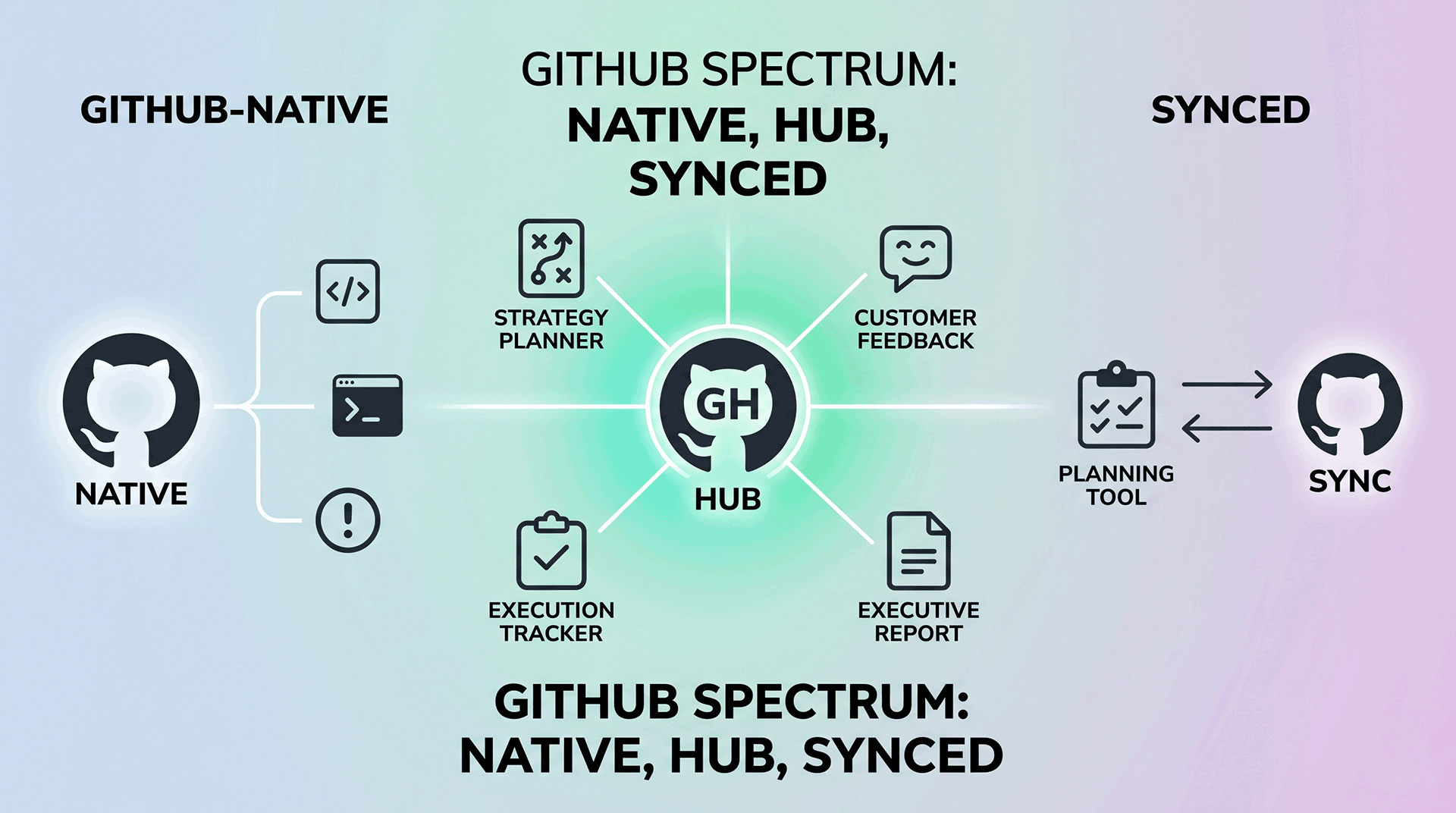
The real question is not whether GitHub should matter more, but whether it is the place where delivery becomes real.
I do not see this as a binary choice. Most organizations are somewhere on a spectrum.
On one side of the spectrum we have GitHub-native teams. These are typically engineering-led or platform teams / startups that value speed and transparency above all else. They run most of the product lifecycle within GitHub. Projects act as the roadmap, Issues represent the work to be done and Discussions are used to surface feedback and debating points. It is very lean and sometimes too lean but this model works well for certain types of teams.
In the middle is the model I think has the most legs: the GitHub-centered hub.
This is the sweet spot.
In this version, GitHub becomes the execution system of record. Work is not real until it is done in GitHub. Strategic planning can still happen in a dedicated product platform. Customer research can still live in a repository used for qualitative research storage. Executive reporting can still come from a separate place because let’s face it, most executives don’t want to look at an issue backlog before breakfast. But the connection to delivery is direct and tight, and the roadmap is not just a slide, it is linked to the issues, the pull requests, and the release progress with minimal translation.
Alright, option three exists. It merges those old-school planning tools, you know them, with some serious GitHub action. Better than keeping them separate? Definitely. But the deep uncertainty never really leaves. Where's the ultimate source of truth, though? Is it stuck in the planning system? What about GitHub? Or just wherever somebody last clicked 'update'?
That ambiguity is what creates the mess.
You've got a basic integration where Programs just talk to one another, exchange some data? That’s better than no connectivity at all.
But a model built around GitHub? Oh, that changes everything. It declares GitHub isn't just a spot for code. It becomes the absolute, final word on delivery.
That is a very different statement.
The Future Is a Hub, Not a Monolith
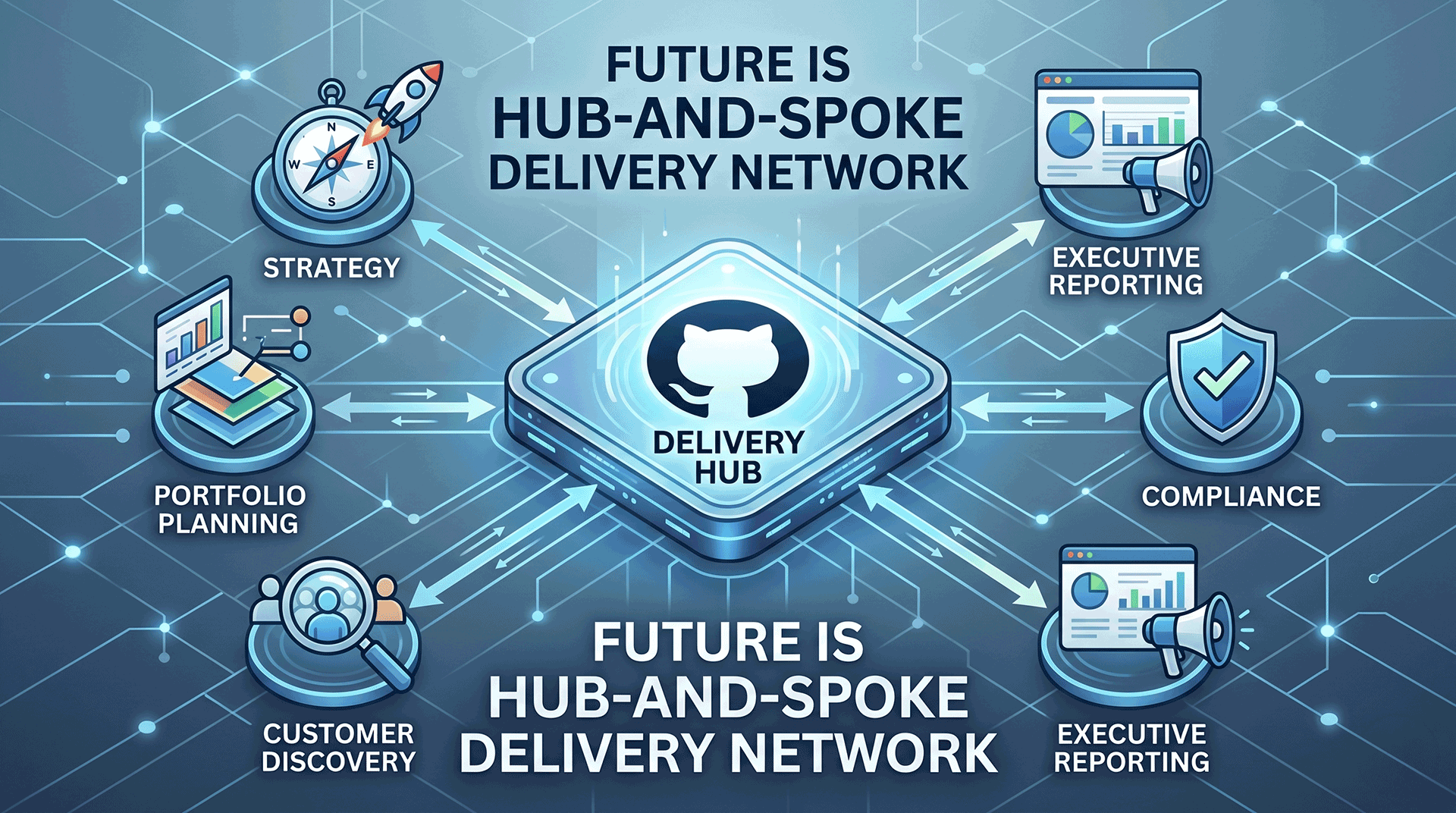
The most practical end state is not one tool for everything, but one execution backbone with the right layers around it.
I do not buy the fantasy of a single tool doing everything well.
At small scale, maybe. At enterprise scale, no chance.
Big organizations just scream for custom setups.
But then there's portfolio planning. That's a whole other animal entirely. And digging into what clients actually want? Always a nuanced, complex subject. Think about financial planning. Or staying compliant. Even getting a new product out the door. You simply cannot tackle these things with simple issue tracking. It will not work.
So I would not frame this as GitHub versus everything else. That misses the point.
The better model I’ve been thinking of is a hub-and-spoke model, where GitHub is the hub where all the planned work turns into actual work, where you can go look at the progress, and verify the release state against evidence. The rest of the tools are the spokes that abstract away in order to support the abstractions that different roles at GitHub need in order to do their work on the strategy, customer understanding, communication, governance, etc. etc. that they do. But they should all flow through GitHub.
Most businesses aren't actually running short on fancy gadgets, believe it or not. No, the real mess pops up when every tool whispers a separate, often conflicting, tale. So, which version is to be trusted? People just do not know.
A hub model fixes that by making one of those stories authoritative.
Implications for Technology Leaders
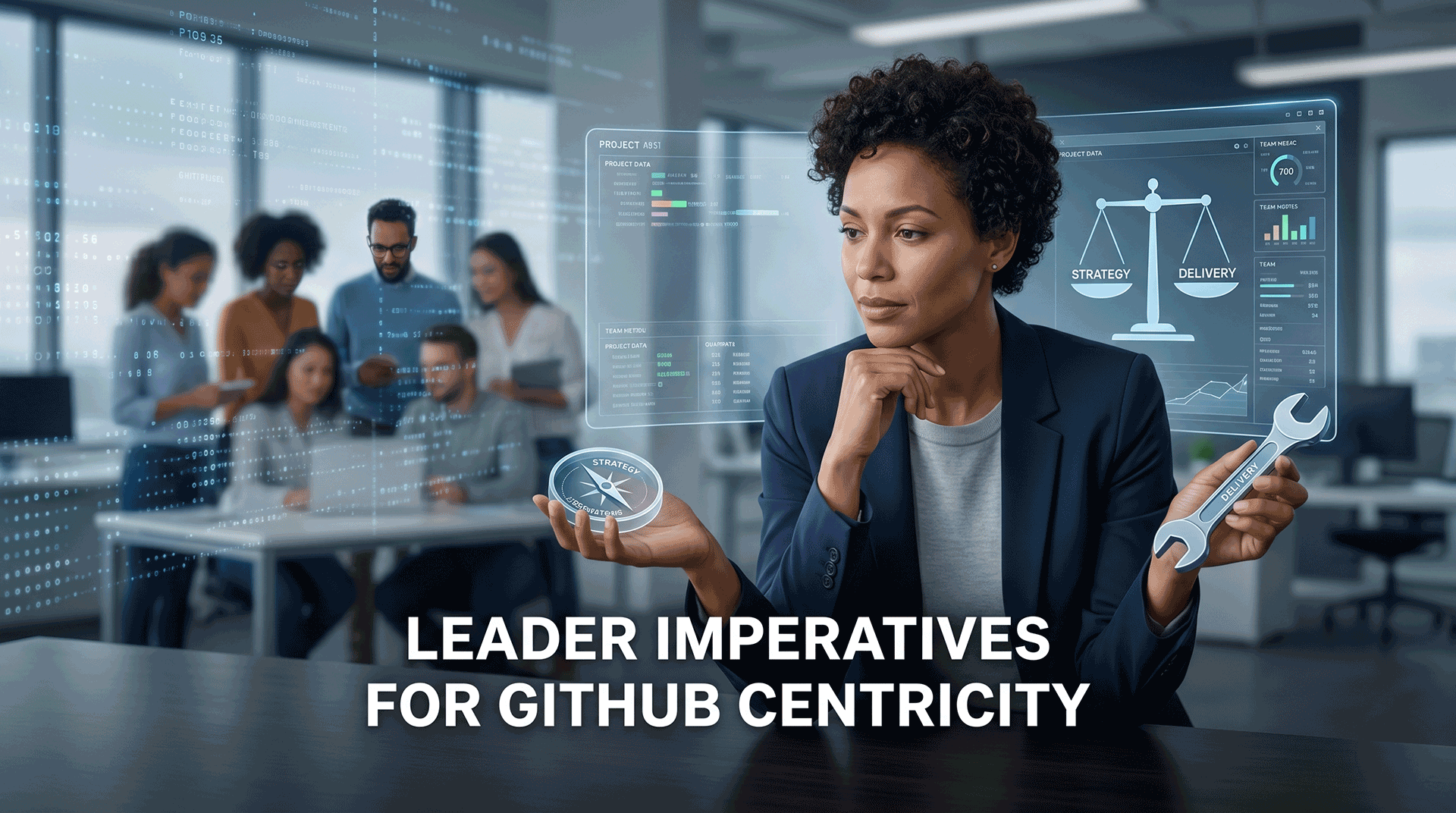
If you cannot clearly name your system of record for execution, your teams are probably paying more friction than they should.
If I were reviewing this trend with a leadership team, I would focus on three practical questions.
First, where are you paying the coordination tax today?
Be specific. Think about the meetings that only ever pop up because your various tools just cannot communicate, stubbornly refusing to share data properly. Who's tediously copying status updates by hand? Or where are those messy, inefficient processes simply hiding, having been swept right under the rug? Every single company, you see, without exception, eventually develops a whole collection of these ingrained routines. These are behaviors absolutely no one enjoys. They provide almost no real value. Yet, bafflingly, everyone does accept them as "just the way things are." That's a prime spot to kick things off.
Second, what is your actual system of record for execution?
Forget the architecture slide. What I truly need is a straight answer for this: when the project roadmap spells out one precise direction, yet your engineers, out there with their hands dirty in the actual field work, are seeing a profoundly different reality unfold, whose word holds the ultimate authority? Which interpretation wins? If you simply cannot provide a direct, unambiguous response to that, then honestly, we've already encountered the most significant issue, haven't we?
Third, are your integrations doing real work or just moving fields around?
Many product workflows fail at the sync step. A sync (moving text from a notes app, for example, to a project planning tool) can look sleek but turn out to be as buggy and error-prone as the underlying workflow that preceded it. Better is to spend time reducing manual work while preserving information across idea, code, and release communication steps.
That said, there is a real risk here, and leaders should not ignore it.
GitHub centric workflows can often push organizations in the direction of what engineering can easily track. However, there is a lot of product thinking that doesn’t easily appear in the form of issues and pull requests. Customer discovery is messy. Strategy is often a series of awkward conversations. Early signals are weak, qualitative, and annoying in ways that spreadsheets and tickets seek to ignore.
So yes, bring planning closer to execution. I am all for that.
Never let the 'how' eclipse the 'what.' Seriously. If your entire focus stays glued to only what's happening inside your own delivery engine, never once bothering to look out, you will, without fail, become unbelievably talented at fashioning the utterly incorrect product.
That would be a terrible trade.
Closing Thought
The real value of a GitHub-centered model is not tool consolidation by itself, but the return of coherence to how teams plan, build, and ship.
I see this shift as a response to accumulated frustration.
For many teams, they have had it! They're tired of pouring money into systems that produce a lot of activity but absolutely no actual insight. And product and engineering squads don't even bother pretending anymore. Expecting all these disjointed systems to somehow fall into line from just one more quick meeting? That's just plain ridiculous.
They usually cannot.
A GitHub-centered operating model won’t fix a weak strategy. It won’t replace customer judgment. It won’t magically turn an organization acting out of confusion into one acting out of intelligence. No set of tools can do that. But it can reduce one of the biggest sources of drag on software delivery that we see today.
And that matters.
Look, it's simple. This change isn't about product folks suddenly going gaga for GitHub, no way; something much deeper is at play here. What's the real deal? Organizations simply do not want their strategy and daily work kept apart any longer. They're done paying to bridge that gap. People have simply grown absolutely exhausted trying to make the connection work.
That is the shift.
Get this done right. That never-ending struggle of trying to knit together disparate systems, forcing them to play nice with one another, it simply evaporates. Your focus shifts. Completely toward the product itself. Most tech leaders will not let that opportunity slip by.




Comments ()