
Your New Co-Pilot Has Arrived: Navigating the GenAI Revolution in Product Development with Caution!
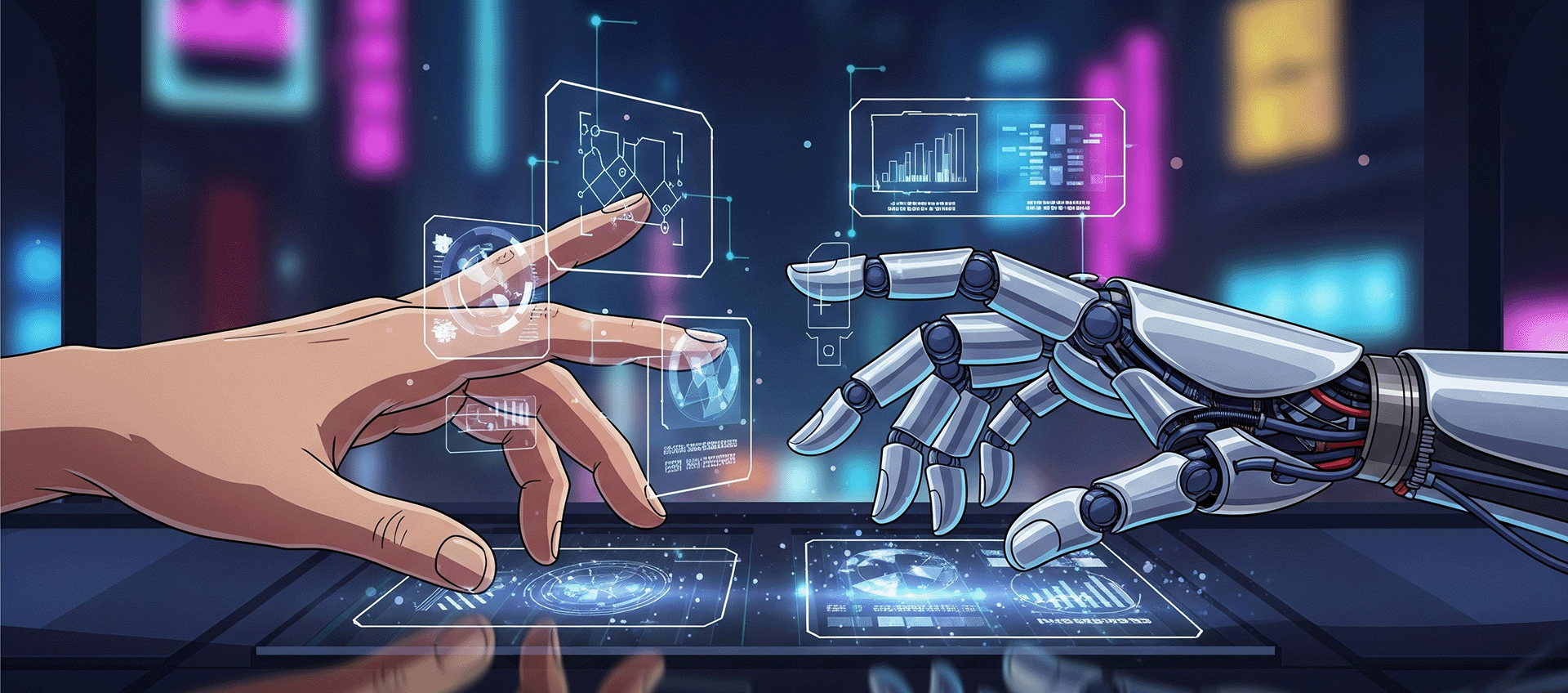
I’ve spent some time doing a deep dive into the real-world impact of Generative AI, and my main takeaway is this: the hype is over, and the implementation has begun. GenAI is no longer some far-off concept. It's a practical, mighty co-pilot being wired directly into the product development lifecycle. What I’m seeing is that it's driving productivity gains by automating the tedious work that bogs down our best people. Some studies have shown that specific tasks get done 50% faster (Top 5 AI Tools for Requirements Management in 2025).
But let's be clear. This new co-pilot is far from perfect. It introduces very real challenges, from serious data privacy risks (Managing the risks of generative AI) to the now-infamous "hallucination" problem, where the AI confidently fabricates facts (What Are AI Hallucinations? | IBM).
Also, Forrester predicts that in the near-term (2-5 years), at least one major organization will attempt to replace as much as 50% of its developers with AI and will fail (Predictions 2025: GenAI Reality Bites Back For Software Developers). This failure will occur because the technology cannot replicate the nuanced problem-solving, contextual understanding, and collaborative skills of human engineers. Instead, Forrester suggests that success will be found in mastering the human-AI partnership, rather than in outright replacement.
My analysis points to one inescapable conclusion: GenAI is not a replacement for human talent. It’s an augment. It’s forcing a fundamental shift in the roles of product managers and developers, elevating their work from tactical execution to strategic oversight, creativity, and critical thinking. The future doesn't belong to the AI; it belongs to the "AI-augmented" professional who masters this new partnership.
Quick-read, visual version
https://visual-blogs.vercel.app/ai_copilot_and_caution.html
The End of the Blank Page
We've all been there: staring at a blank document, the cursor blinking mockingly, while a mountain of user feedback waits to be synthesized.

That blinking cursor on a new Product Requirements Document (PRD). The chaotic notes from a brainstorming session. The tenth iteration of a button design. These are the necessary evils of our industry. The grind that stands between a great idea and a great product.
But what if you had a partner who had read the entire internet, never got tired, and could turn your messy thoughts into a structured first draft in seconds? That’s the reality of Generative AI today.
This isn't another article about an AI apocalypse or a utopian fantasy. I want to cut through the noise and share what I've learned about how GenAI is tangibly reshaping product management and development right now. We'll look at the incredible efficiency gains, the very real pitfalls to watch out for, and how we must evolve to become masters of this powerful new tool.
The Productivity Boom: Your New AI Co-Pilot in Action
The immediate impact of GenAI isn't magic; it's the brute-force elimination of tedious work across the entire product lifecycle.

The most immediate impact I've seen is the sheer acceleration of everything we do. GenAI is acting as a force multiplier at every stage, and it’s no longer a niche tool. A recent McKinsey survey noted that Organizations’ use of AI has accelerated markedly in the past year (to 78%), after years of little meaningful change. (The state of AI: How organizations are rewiring to capture value ).
From Rough Sketch to Brilliant PRD
AI isn't writing the final PRD; it's killing the “blank page” problem so your PM can focus on strategy, not syntax.

Let's be honest, writing a PRD can feel like a chore. AI tools are changing that. They can ingest raw inputs. For example, interview transcripts, support tickets, call recordings, brainstorming notes, etc. They can spit out a well-structured PRD, complete with user stories and acceptance criteria. This doesn't replace the product manager; it liberates them. By eliminating the "blank page" problem, it frees up their time for what really matters: strategy, customer validation, and vision. In fact, some tools have been shown to cut the time spent on requirements management by up to 50% (Top 5 AI Tools for Requirements Management in 2025). That’s a massive strategic advantage.
From Napkin Sketch to Interactive Mockup
We're moving from painstaking pixel-pushing to generating dozens of design directions in the time it takes to grab a cup of tea.

For UX and design engineers, the pace of change is just as dramatic. AI plugins in tools like Figma can now automate the grunt work of component creation. More impressively, I've seen how to go from a simple text prompt, a "napkin sketch" idea, to a high-fidelity mockup in minutes using text-to-UI models. This unleashes creativity and allows teams to explore dozens of visual directions before committing to a final design.
Accelerating from Concept to Code (and a Paradox!)
AI isn't replacing the best engineers; it's freeing them to tackle the architectural puzzles that genuinely matter.

This is where the engineering teams really start to lean in. AI code assistants like GitHub Copilot are no longer just fancy autocompletes. They generate entire functions, write boilerplate code, and draft unit tests, freeing up developers to focus on complex logic and system architecture.
But I also want to discuss an interesting paradox, as some studies are providing conflicting outcomes.
Viewpoint 1: The data from a GitHub research: developers using these tools not only finish tasks faster but also feel more focused and satisfied with their work (Research: quantifying GitHub Copilot’s impact on developer productivity and happiness).
Viewpoint 2: A randomized controlled trial conducted by METR.org (Measuring the Impact of Early-2025 AI on Experienced Open-Source Developer Productivity - METR ) in July 2025 found a reduction in productivity when AI tools were used for writing code in specific circumstances. Specifically, the study revealed that experienced developers working on complex tasks within large, high-quality open-source projects who used AI tools actually took 19% longer to complete their tasks compared to those who did not use AI.
I know - this is confusing! This is where finding the right use cases and putting guardrails around usage is crucial.
Smarter Testing, Faster Fixes
GenAI is becoming our QA team's secret weapon, finding obscure edge cases that even the most meticulous human might miss.

In the testing phase, GenAI is proving to be a formidable ally. It can generate comprehensive test cases, including obscure edge cases a human tester might overlook (Generative AI in Software Testing: Reshaping the QA Landscape - testRigor). By analyzing code changes, it can even predict potential bugs, allowing QA teams to focus their efforts where they’re needed most. What I'm hearing from experts is that AI will continue to automate the most repetitive parts of quality assurance, elevating the role of QA to one of strategic risk analysis.
Navigating Turbulence: The Human in the Loop
GenAI is a brilliant co-pilot, but you still need a human pilot with their hands on the controls, especially when turbulence hits.
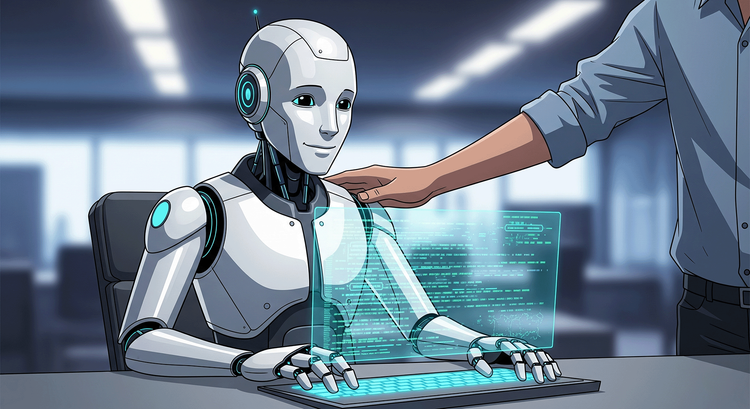
Now, before we get carried away, it's crucial to talk about the guardrails. GenAI is a powerful co-pilot, but you absolutely need a human pilot in the captain's chair.
The "Creative Storyteller" Problem (aka Hallucinations)
Treat AI output like a first draft from a brilliant but occasionally unreliable intern: full of potential, but requiring rigorous verification.

Generative AI models suffer from what the industry calls “hallucinations.” They sometimes confidently make things up (What Are AI Hallucinations? | IBM). An AI might invent a statistic for your market analysis. This is why human oversight is non-negotiable. The product manager’s role evolves into that of an expert editor, verifying the accuracy of every AI-generated requirement against customer needs. Think of the AI as a brilliant brainstorming partner. Great for ideas, but you’re the one who has to fact-check the final report.
Data Privacy Concerns
Feeding proprietary data into a public AI model isn't just risky; it's a potential act of corporate malpractice.

The other major red flag is data privacy. When you feed customer feedback or proprietary code into a public AI model, where does that data go? How is it being used? This is a minefield of security and compliance risks, especially with regulations like GDPR (Managing the risks of generative AI). As leaders, we have to be paranoid about this. Innovative organizations are already building "data sanitization" pipelines and exploring private, on-premise models to get the power of AI without betting the farm on data security.
The Rise of the AI-Augmented Professional
The future doesn't belong to AI; it belongs to the professionals who master the art of collaborating with it.

After synthesizing all my research, a central theme became crystal clear: this isn't a story of replacement, but of augmentation. GenAI excels at tasks that are structured and repetitive. Humans excel at tasks that require creativity, empathy, and strategic judgment. The magic happens where those two skill sets meet.
The future of product development belongs to the AI-augmented professional. This is the person who offloads the tactical grunt work to their AI co-pilot, freeing up their cognitive bandwidth to focus on the high-value activities that truly drive innovation.
Evolving for the New Era
The question is no longer “Should we use AI?” but “How do we fundamentally change our teams and skillsets to leverage it?”

So, what does this mean for our careers and our organizations? It means we need to adapt, and fast.
New Skills on the Block
Execution is becoming easier; the new currency is critical oversight, strategic questioning, and systems thinking.
The skills that define a top-tier PM or engineer are changing before our eyes. Here’s a good list:
- Prompt Engineering: This is the new superpower. A junior team member might ask, “Summarize these customer calls.” An AI-augmented professional will ask, “Act as a product manager. Analyze these 20 support call transcripts, identify the top three user frustrations, and draft a user story for each one in the Gherkin format.”
- Critical Oversight & Editing: The ability to instantly assess, validate, and refine AI-generated content, separating the brilliant from the bogus.
- Systems Thinking: As AI handles smaller components, the human role elevates to designing and integrating the larger systems, both technical and organizational.
- Data Literacy and Governance: Understanding the ethics and security of AI is no longer a job for the legal team; it’s a core competency for anyone building products (12 Generative AI Skills Needed for the Future of Work).
Are You Organizationally Ready?
An AI tool license is not an AI strategy; true transformation requires a cultural commitment to experimentation and learning.

An AI tool license is not an AI strategy. As leaders, the onus is on us to ask the right questions and measure the proper outcomes:
- Investment: Are we funding training and internal experimentation, or just software licenses?
- Talent: How are we redefining our career ladders and performance metrics to reward AI augmentation and strategic thinking over raw output?
- Risk: Do we have a clear data governance policy for AI? Who owns the risk when an AI hallucinates?
- Culture: Are we creating psychological safety for our teams to experiment and fail with these new tools?
True transformation requires a cultural commitment, and that commitment starts with us. For software engineering and coding of high-stakes, complex systems, GenAI may provide a massive boost to first-draft creation, where headline-grabbing 50%+ speed improvements are realized. However, the data on code churn and the METR.org study expose a potential hidden cost in the review and refinement stages. The AI-generated artifact, while plausible and quickly produced, may lack the necessary nuance, contain subtle but critical errors, or fail to meet the high-quality standards of a mature product, thus shifting the burden of human effort from creation to verification. Organizations that measure productivity based solely on the speed of initial output (e.g., initial project completion and go live, lines of code written per day) will be dangerously misled. A more holistic view of productivity is required, one that accounts for the entire lifecycle, including review, rework, and long-term maintainability. The truly effective "AI-augmented professional" is not just one who can generate a fast first draft with AI, but one who possesses the deep domain expertise to rapidly and efficiently validate and refine that draft to production-ready quality.
Your Co-Pilot is Ready for Takeoff
This isn't autopilot; it's a powerful co-pilot that demands a skilled human to chart the course and navigate to the destination.

Generative AI is one of the most transformative technologies I've seen in my career. It's a powerful co-pilot, ready to help us build better products faster than ever before. It can draft our documents, design our interfaces, write our code, and test our work.
But it is not an autopilot. Its power is only unlocked when guided by human expertise, creativity, and critical judgment. The challenge, and the opportunity for all of us is to become skilled pilots. The professionals and organizations that master this new relationship will be the ones who define the next decade of innovation.
Now, I’d love to hear from you. How are you using Generative AI in your product development process? What have been your biggest wins and "uh-oh" moments?


Comments ()