
The Last Mile Is the Real AI Product Now

The AI race is no longer about who has the model, but who can make it work inside a real business.
The recent July 2026 announcement of the Frontier Company by Microsoft Corporation, backed by a $2.5 billion investment and 6,000 embedded industry and engineering specialists, provided an interesting framework for me. Their primary objective is not to draft promotional launch decks; rather, it is to integrate Microsoft Azure, Microsoft Copilot, and intelligent Agents into the complex machinery of customer operations.
In my opinion, this strategic shift should cause every technology leader to pause and reflect.
Historically, most software organizations follow a standard industry business model of building a software solution once and distributing it to many customers, which yields high gross margins. However, what Microsoft announced with the Frontier organization feels very much like the forward-deployed engineering model popularized by Palantir.
Furthermore, Microsoft is not the only entity pursuing this direction. AWS recently committed $1 billion to a similar unit to deploy engineers. Similarly, OpenAI raised over $4 billion for its Deployment Company. And Anthropic launched a $1.5 billion joint venture with Blackstone and Goldman Sachs Group.
The primary question is no longer whether Artificial Intelligence (AI) is significant. We have already established that baseline. The more critical question, in my opinion, is whether implementation itself has become the primary product.
Pilot Purgatory Has a Price
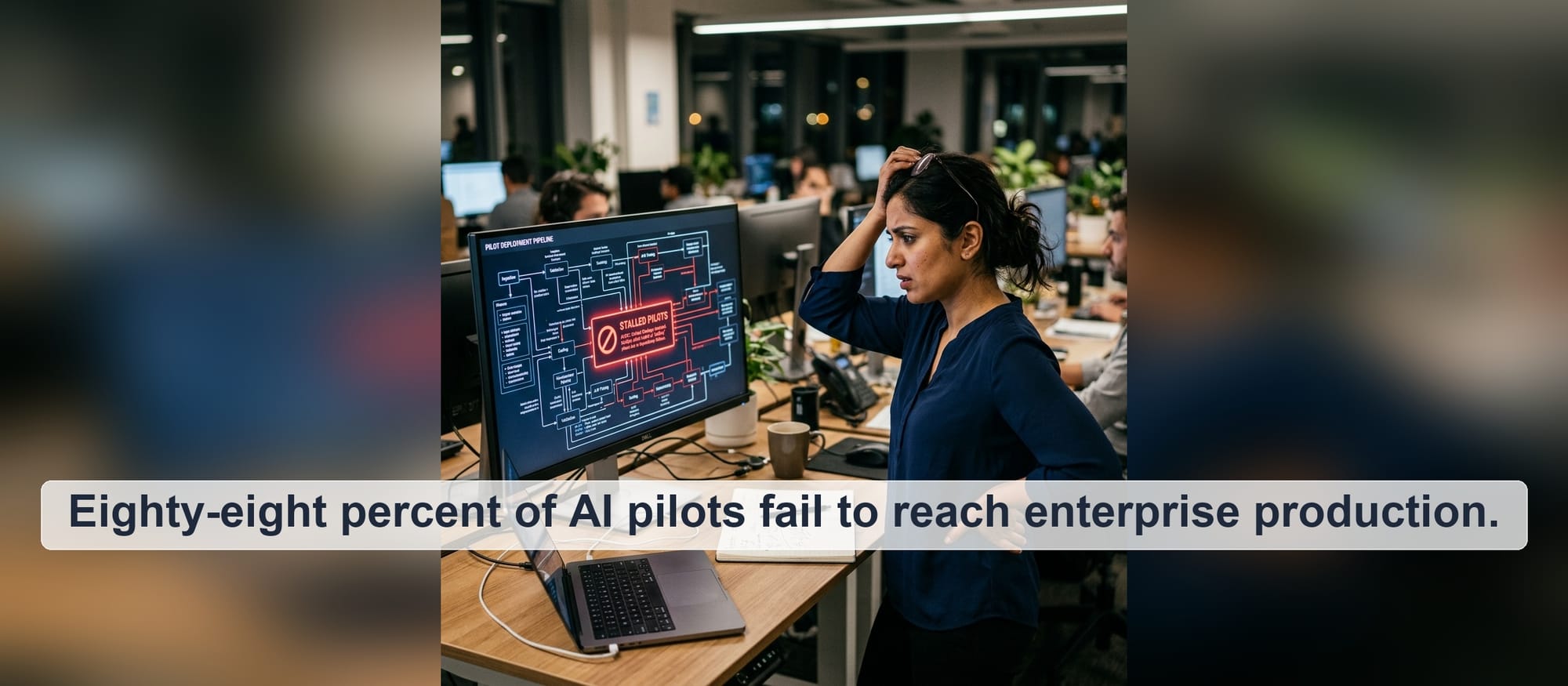
AI demos are easy to admire, but production systems are where good intentions go to get tested.
In my opinion, perfect demonstrations of Artificial Intelligence (AI) warrant a healthy degree of skepticism. This is not to suggest they are fraudulent; indeed, many are technically impressive. However, demonstrations exist in clean, controlled environments, whereas Enterprises do not.
Established organizations possess legacy workflows, partially documented procedures, complex approval hierarchies, fragile system integrations, and critical spreadsheets that are universally disliked but never retired!
Multiple research findings support this observation:
- 88% of observed AI proofs-of-concept fail to reach widescale deployment, according to IDC research commissioned by Lenovo. This indicates that only a small fraction of projects successfully transition to production.
- Industry estimates suggest Enterprise AI projects often require 12 to 24 months to reach production, with some consulting partners citing averages of approximately eighteen months for traditional system-integrator engagements.
- This is not new either. As per a report from 2024, 74% of companies have yet to show tangible value from AI, according to Boston Consulting Group.
- The organizational change framework known as the 70-20-10 rule suggests that roughly 70% of digital transformation success depends on people and culture, 20% on foundational technology infrastructure, and only about 10% on the core algorithms themselves.
In my opinion, this final point is far more critical than software vendors typically acknowledge.
Model access is no longer the primary hurdle; indeed, every major Enterprise can secure access to capable models. The actual challenge is ensuring these systems operate safely, reliably, and measurably within the business.
Consequently, this is the stage where pilots stall.
The AI demonstration resembles a movie trailer: it is brief, engaging, and highly polished. In contrast, implementation is the full-length feature where procurement, legal, data governance, security, and multiple legacy systems all require direct input.
It is less glamorous, but far more important.
The Bear Case: Services in Software Clothing
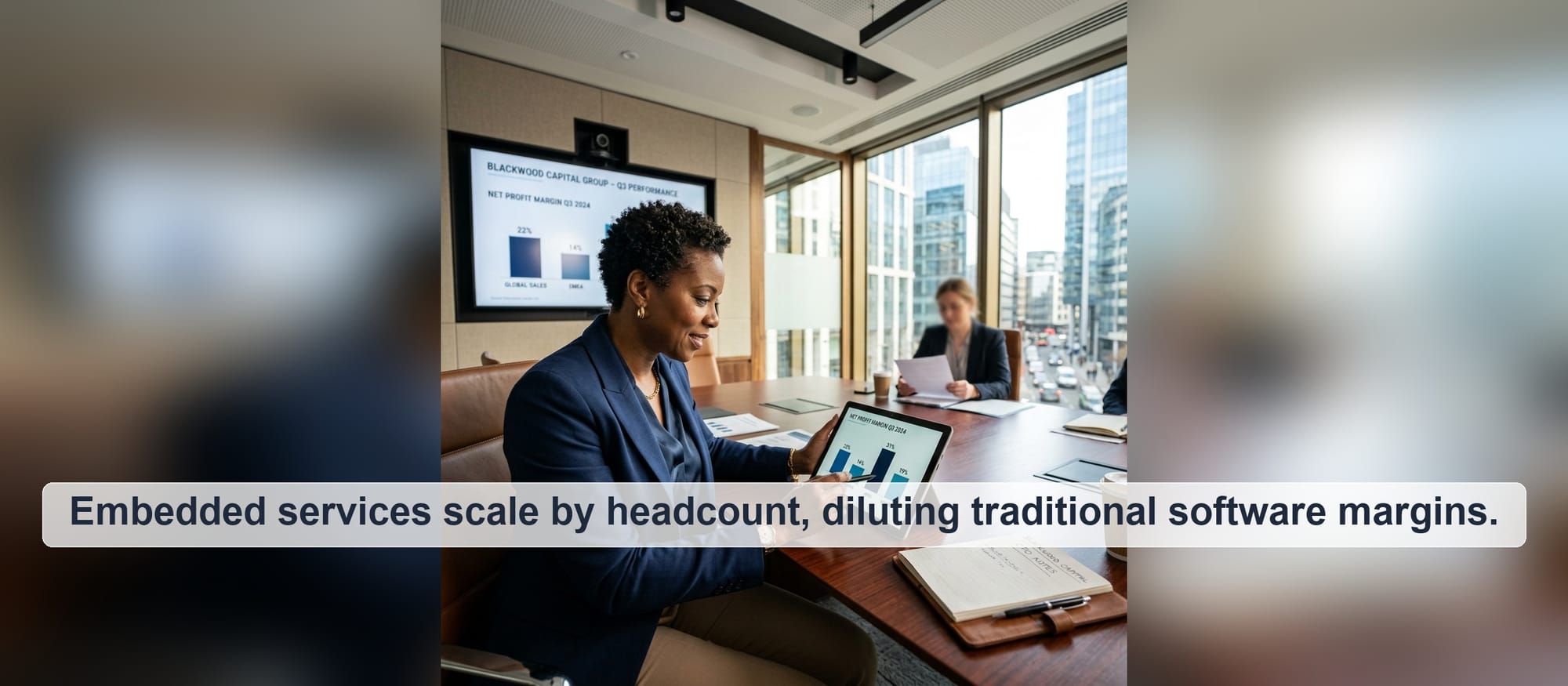
If your product needs an army to land, someone will eventually ask whether it is really a product.
In my opinion, the skeptical perspective is straightforward and entirely valid.
A deployment division of 6,000 specialists does not scale in the manner of traditional software. Instead, it scales with hiring, operational coordination, discrete projects, and client-specific effort. Consequently, any Chief Financial Officer (CFO) familiar with professional services margins will identify the financial warnings quickly.
The typical margins generally look as follows:
- Pure Software as a Service (SaaS) typically operates at gross margins of approximately 75% to 85%.
- Cloud infrastructure margins usually sit closer to 60% to 70%, depending upon capacity utilization and scale.
- Traditional IT services margins often average around 30% to 35%.
- The hybrid model of Microsoft Frontier remains the critical question: can specialized services unlock software adoption at scale, or will they dilute the software business model?
If the Frontier division operates like a traditional systems integrator, it will inevitably drag down Microsoft Corporation's overall economics.
This represents the negative thesis.
Furthermore, it raises a significant product strategy question. Microsoft Copilot has reportedly crossed 20 million paid enterprise seats. However, paid seats do not necessarily equate to active, valuable usage. In my opinion, many Enterprises have discovered this discrepancy through significant expense. Acquiring licenses is simple; modifying operational habits is not.
There is another structural risk that I believe is important to monitor: the product-discipline trap.
When forward-deployed teams rescue every imperfect product edge with custom scripting, workarounds, and late-night manual effort, the core product engineering teams may stop experiencing user challenges directly. This is dangerous. A forward-deployed engineering team should function as a telemetry network for product deficiencies, not as a permanent manual support team.
If every customer requires custom integration indefinitely, the business model breaks.
The Bull Case: Context Is the Product
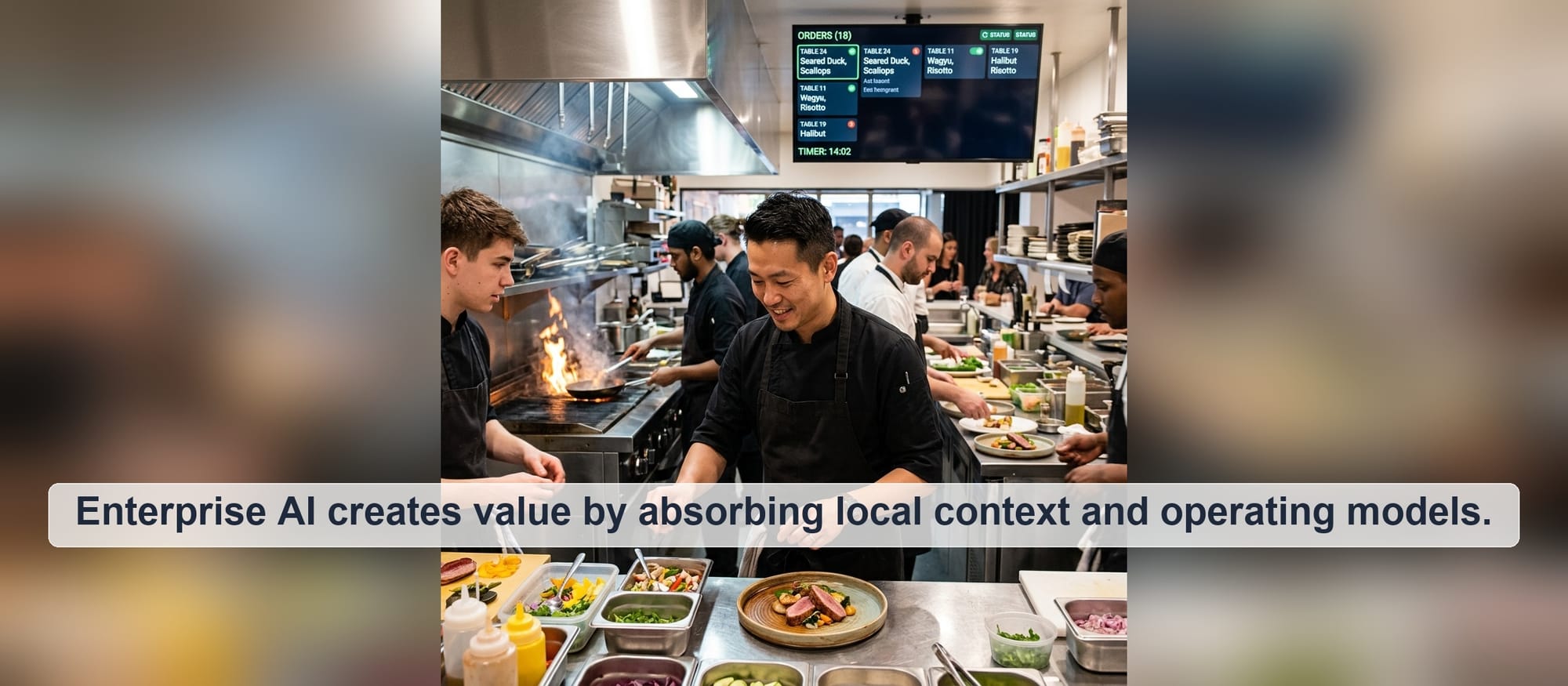
Enterprise AI creates value only when it understands the strange, local, inconvenient details of work.
In my opinion, the optimistic argument is also highly compelling.
Perhaps Microsoft is not acknowledging defeat. Instead, it is likely recognizing operational reality.
Enterprise Artificial Intelligence (AI) does not resemble delivering a clean Software as a Service (SaaS) workflow to a small team. AI derives its value from context, and context is inherently complex. It resides inside internal policies, tribal knowledge, legacy systems, approvals, exceptions, and undocumented human judgment calls.
A generic chatbot provides an impressive demonstration.
However, a functional Enterprise Agent is fundamentally different. It must comprehend your procurement rules, security guidelines, data access boundaries, internal terminology, and escalation paths. It must understand when to take action, when to query, and when to pause.
This is not simply a feature; rather, it is a complete operating model.
One can compare it to installing a high-performance commercial kitchen inside an established restaurant while active dinner service is running. The stove is important, certainly. However, the physical layout, staff routines, supplier logistics, safety inspections, and the specific corner where tickets are misplaced are equally critical.
The final mile is not a minor delivery detail.
Instead, it is where the actual business value is generated.
Consequently, I believe the industry is migrating toward a new classification. It is neither pure software nor traditional management consulting. It is a hybrid: software-enabled business transformation.
It is a complex term, but a very practical concept.
The Palantir Lesson
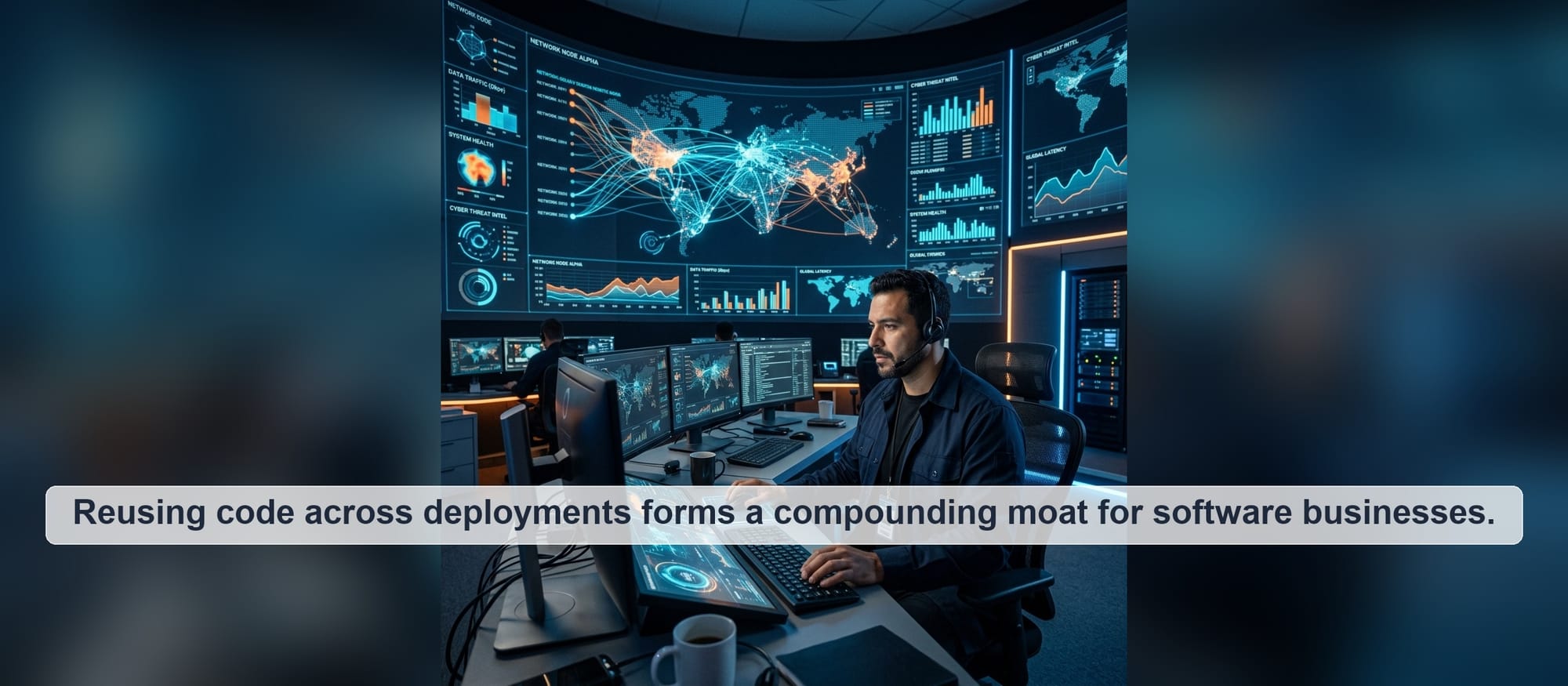
Forward deployment works only when every customer lesson makes the platform stronger.
Palantir did not invent close customer relationships; however, they successfully demonstrated that forward-deployed Engineering can compound if the software architecture is intentionally structured for it.
The critical word is compound.
Palantir’s Forward-Deployed Engineers are not intended to build custom, isolated projects indefinitely. Instead, they develop solutions on a unified, shared platform, which includes their semantic Ontology layer. Consequently, client-specific modifications transition into reusable platform structural elements. This methodology transforms bespoke challenges into platform assets.
In my opinion, this explains why Palantir Technologies reports software-like gross margins in the high 80s and approximately $1.5M in annualized revenue per employee.
The lesson for Microsoft is clear: simply recruiting software engineers is not a sustainable moat.
The compounding platform architecture is the actual moat.
Microsoft possesses many of the necessary foundational components: Microsoft Fabric, Foundry, Copilot Studio, Agent 365, Microsoft Purview, and Microsoft Entra. This represents a robust suite of tools. The critical question is whether the Frontier division can transform these resources into repeatable implementation blueprints categorized by industry verticals, workflows, and roles.
If every deployment yields reusable reference architectures, Agent patterns, governance templates, and integration playbooks, the business model can scale.
However, if each deployment concludes as an isolated custom project that cannot be replicated, Microsoft has merely established a very large consulting division under a different name.
The New Playbook for AI Adoption
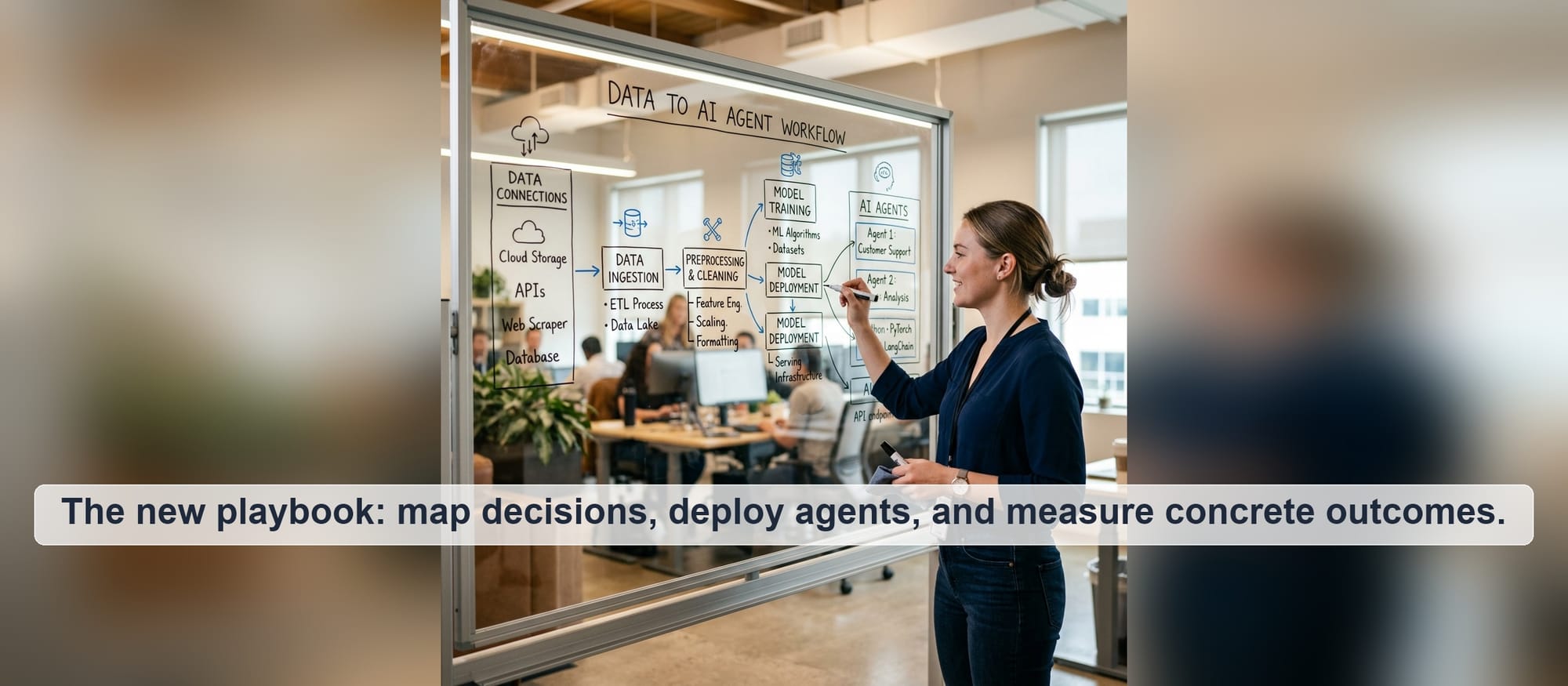
The winning teams will stop selling seats and start engineering outcomes.
For product managers, enterprise architects, and Engineering leaders, this shift fundamentally alters the nature of the work.
Historically, the legacy Enterprise software strategy consisted of the following sequence:
- Build product
- Sell seats
- Onboard users
- Track adoption
- Renew contract
In contrast, the new Artificial Intelligence (AI) strategy is significantly more demanding:
- Find the workflow
- Map the decisions
- Connect the data
- Define the guardrails
- Deploy agents
- Measure outcomes
- Retrain the process
- Feed the lessons back into the platform
In my opinion, this requires a completely different operational capability.
Product managers can no longer evaluate success solely in terms of software features. Instead, they must design for deployment scalability and repeatability. Similarly, enterprise architects must treat governance and identity security as primary, foundational design concerns, rather than administrative tasks completed at the end of a project. Furthermore, Engineering teams must assume that human-in-the-loop validation, detailed audit trails, and systematic escalation paths are central to the overall product experience.
In my opinion, the most effective AI systems will not appear magical.
Instead, they will feel structured and predictable in the right areas.
They must be predictable, observable, governed, and useful.
Ultimately, that is the value that modern Enterprises are willing to finance.
What I Would Measure in 2027
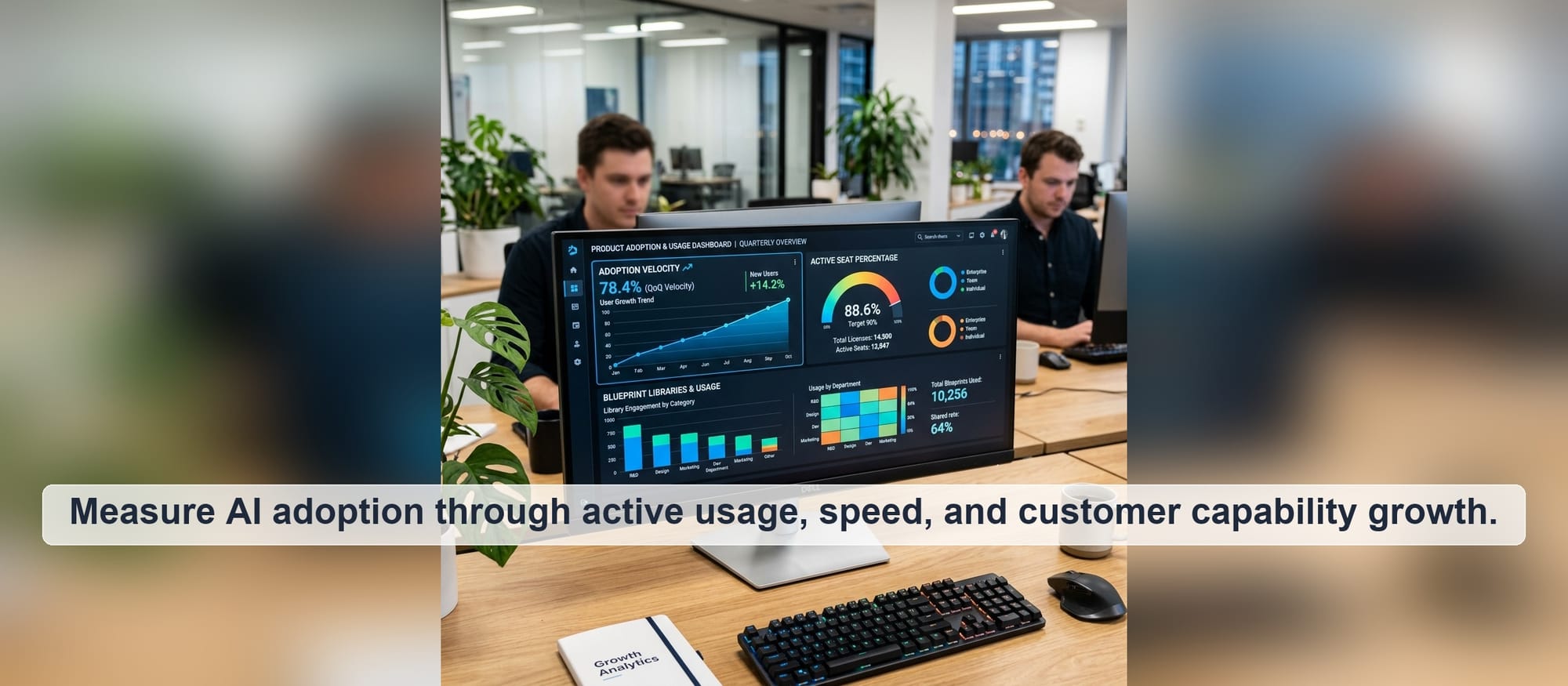
The scorecard should move from licenses sold to work actually changed.
If I were to evaluate the progress of the Microsoft Frontier Company over the next fiscal year, I would not focus primarily on revenue headlines. Instead, I would seek evidence that their implementation model resolves the fundamental challenges of technology adoption.
In my opinion, the following evaluation framework should be applied:
- Microsoft Copilot weekly active usage: Does the average Enterprise increase active seat utilization from approximately 25% toward 50% or higher?
- Time to production: Does the typical 12 to 24 month Enterprise deployment timeline for AI contract in a measurable manner?
- Reusable libraries: How many standardized industry blueprints, Agent architectures, governance guidelines, and integration adapters are successfully published?
- Partner ecosystem health: Does the consulting partner network expand and strengthen, or do partners express concerns regarding channel competition?
- Client self-sufficiency: Do client organizations become more capable over time, or do they remain reliant on Microsoft specialists?
In my opinion, this final metric is the most critical.
A successful implementation framework should educate and empower the customer to operate independently. Conversely, an ineffective methodology establishes a permanent reliance on external services. Consequently, there is a clear distinction between operational enablement and vendor lock-in, and customers will recognize the difference quickly.
The Economics Will Decide
AI implementation is not a side quest anymore, it is now part of the business model.
The $2.5 billion investment by Microsoft does not indicate that software economics are no longer relevant.
Instead, it suggests that software economics are now heavily dependent upon implementation economics.
The organizations that succeed in Enterprise AI will not be those that rely solely on superior models. While model capability is undoubtedly important, the actual leaders will convert the labor-intensive, custom requirements of client deployments into repeatable, standardized operational infrastructure.
In my opinion, this is the core challenge.
There exists a very narrow distinction between forward-deployed Engineering and highly expensive customer support teams. The casual corporate attire is optional; however, a positive ROI is not.
Microsoft possesses the distribution channels, platform capability, and Enterprise trust required to execute this strategy. However, operational scale will not be achieved through head count alone. Instead, it will depend upon whether each individual deployment renders the subsequent project faster, more cost-effective, more secure, and highly predictable.
In my opinion, this represents the true test.
The final mile is no longer a secondary phase following the product.
Instead, the final mile has become the core product.
Citations and Further Reading
The underlying trends extend beyond Microsoft, and the empirical evidence is now too extensive to dismiss.
- 88% of AI pilots fail to reach production but that's not all on IT (CIO.com, IDC/Lenovo research)
- Microsoft Frontier Company: AI engineering that amplifies and protects your intelligence (Official Microsoft Blog)
- June 2026 announcements - Partner Center (Microsoft Learn)
- AI Adoption in 2024: 74% of Companies Struggle to Achieve and Scale Value (BCG)
- The Root Causes of Failure for Artificial Intelligence Projects (RAND Corporation)
- AWS puts $1 billion into new AI unit to embed engineers (CNBC)
- Microsoft commits $2.5 billion and 6,000 employees to new AI implementation unit (CNBC)
- AWS launches $1 billion forward-deployed AI engineer unit (Yahoo Finance / Quartz)
- OpenAI Launches $4B Deployment Company for Enterprises (TechWyse)
- Anthropic, Goldman and others launch $1.5 billion AI venture (CNBC)
- Microsoft 365 Copilot Hits 20M Paid Seats (TechCrunch)
- MIT report: 95% of generative AI pilots at companies are failing (Fortune)

Comments ()