
Goodbye, PRD? How Claude Design Is Changing Product Development
The PRD is not dead, but its days as the only source of truth are numbered.
For decades, the Product Requirements Document has carried a lot of weight in software teams.
Too much, if I am being honest.
We treated our PRD like a constitution. A source of truth. A contract. Beautifully formatted to hide confusion.
I’ve been part of product reviews for many years, and this scenario plays out a lot! 20 pages of requirements and reviews from 3 different teams, all agreeing, along with wireframes. And then the first cut of a prototype hits, and a lot of material from the product requirement document goes down the drain because the stakeholders now finally know what they actually want after seeing it in action!!
That is not a writing problem. The main problem is that words and low-fidelity wireframes simply do not convey an experience. Sure, you can lay out all the goals easily enough. But making people actually feel the product? That hardly ever works out.
This gets costly quick. Product development turns expensive when teams finally grasp, much too late, they weren't all seeing the same thing!
That is why Anthropic's recent launch of Claude Design caught my attention.
Not because it kills Figma. It does not.
Not because it replaces designers. It should not.
Pragmatic. This is the hardest part of getting work done, between having an idea and having a shared view of what images represent for teams of people.
This is alongside my observation that Product Teams are slowly but steadily moving towards a prototype-first way of discussing and debating (as opposed to the traditional PRD-first method where so much time is wasted trying to get everyone to understand the written words).
That is a healthier way to build.
Subscribe (button at top right) to get these blogs in your inbox, and enjoy additional features!
Summary: From Text to Tangible
The biggest value is not prettier mockups, it is faster shared understanding.
Anthropic's Claude Design empowers you to whip up impressive mockups, compelling presentations, or various other visual aids just by typing some words. It is remarkably swift. So, who exactly stands to gain from this? Certainly not professional designers, those who sketch and create visuals day in and day out.
But let’s consider the product managers. Startup founders, too. What about data analysts, or even those high-level tech leaders? These individuals constantly need to articulate a concept, to visualize an idea rapidly, well before an entire design team is ever brought into the project.
That’s the interesting target audience for this.
I found that Claude Design can ingest a company’s codebase or design files and then generate all sorts of artifacts that look to be fairly close to that company’s brand and product language. This is very different from the many prompt-to-pretty-picture type tools that generate very polished and pretty designs. However, most of these are generic and look like many other SaaS designs (i.e. lots of clean and gradient designs with lots of rounded boxes and cards). Their charts are all very positive and colorful and include many different graph types. Such tools are great for generating one good pitch deck. However, they are not so great for generating a solid set of artifacts that can support real product conversations over time.
The market truly shifted. Fast. Folks instantly decided it was a dagger pointed straight at Figma's heart, and sure enough, Figma's stock plummeted right after the launch. But I thought that immediate reaction felt too neat, too… clean. Investors love a simple narrative. Those of us actually doing the work? We don't get that luxury; our reality is just a tangled, messy knot where easy answers are never found.
Back to what Claude Design can do for us. The terrifying blank page: that’s now gone. Claude Design just crushes it; initial thoughts are quickly converted into existence. Projects move. Teams get something tangible. No more just endlessly debating those incredibly fuzzy requirements that can't ever seem to firm up.
Still, there are some real drawbacks. The code, for instance, once generated, becomes a complete one-way street; you literally can't undo your steps. And everything costs. Forget about actual collaboration; the tools here are so primitive, they simply don't compare to professional design programs. Seriously, do not. Nobody should be under the impression this replaces serious, established design applications. It simply cannot, yet.
The Monolith Crumbles: From PRD-First to Prototype-First
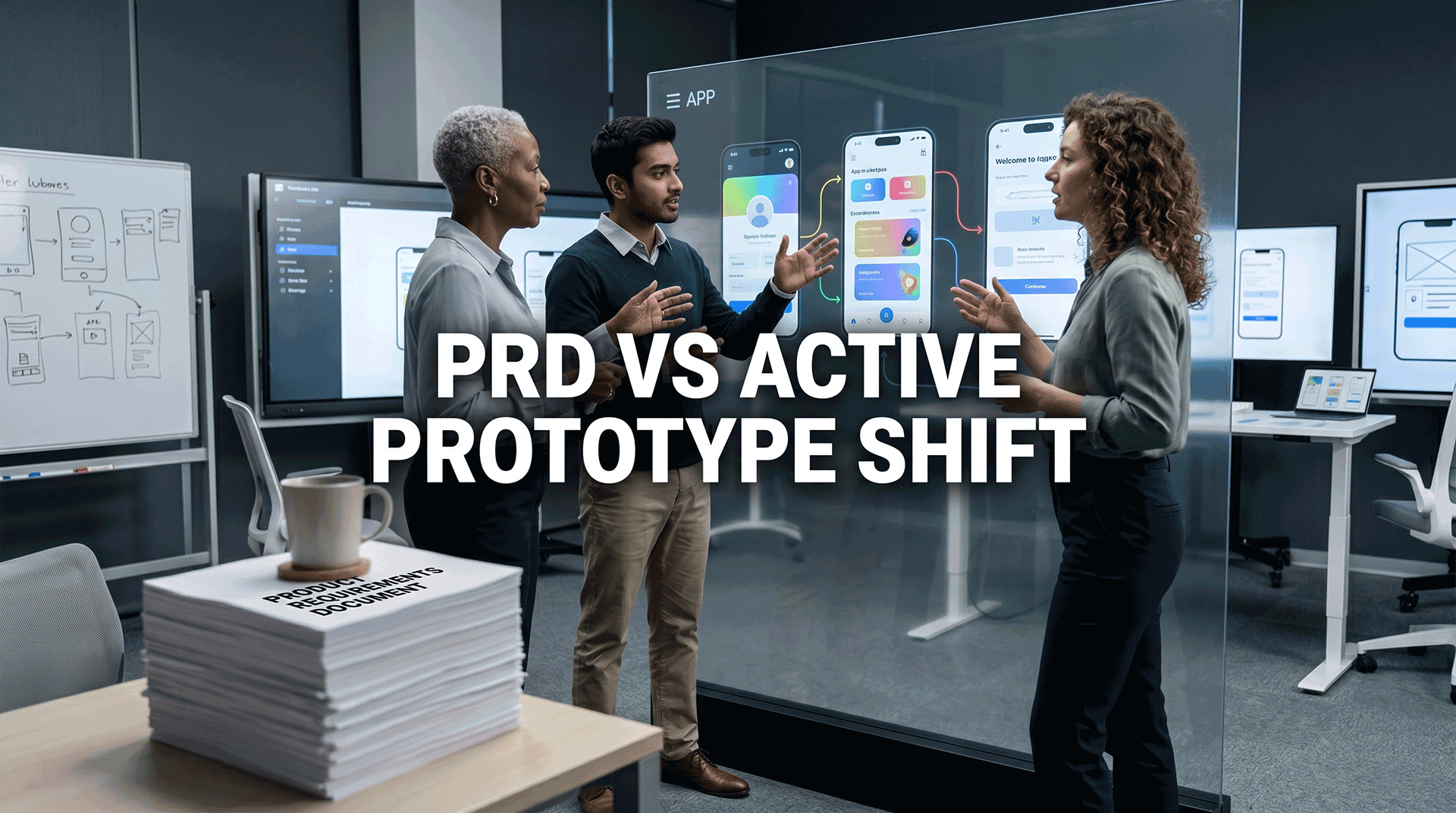
A prototype gives teams something to argue with, and that is far better than politely agreeing with a document.
The old workflow is familiar.
The product manager drafts that PRD. A designer just waits. And those static mockups don't land on an engineer's desk until way too much time has passed. The folks who actually matter, the key stakeholders, don't get to see anything concrete. Not until it's much later in the game. That's when all the incredibly difficult questions really begin to fly.
- Why is this flow here?
- What happens when the customer has no data?
- Should this screen exist at all?
- This is not exactly what I wanted!!
Sound familiar? Now we need to meet, urgently!! But what about calendars - especially mornings? Completely booked. Each slot is taken.
Individuals have already poured so much energy, so much actual feeling, into an idea that is just... not what the business needs.
Then, teams usually start muttering, "We'll just tackle that in phase two, won't we?" You know precisely what that means :-) !!
Phase two is where good ideas go to nap.
The PRD hasn’t failed because people are bad at writing. The PRD has failed because words and low-fidelity wireframes, no matter how well written, cannot carry the weight that we put them under. A high-fidelity experience is a low-bandwidth signal when it gets squeezed into paragraphs and sketches.
So here’s a major shift for the way Claude Design approaches their design process. They are releasing a prototype, so early in the design process, for people to test before the formal design process has even begun and that in itself is quite significant.
Instead of asking everyone to “imagine a dashboard to show adoption trends to the managers” (a pretty hard thing to do), you get to see a real possible implementation of such a dashboard.
The real value of this second version of the meeting is that it is sharper. People react faster. Bad assumptions are exposed sooner. Vague language is exposed. The meeting is less theatrical and therefore more useful.
I do not think the PRD disappears. It gets demoted, and that is probably overdue.
The PRD becomes a reference. It has loads of information. You'll find things like the actual business goals, how we intend to measure success, every single constraint you might be facing, precise details on who holds authority for what actions, strict data handling rules, and, obviously, all the security needs we have.
But the prototype becomes the main object of debate.
That is a better division of labor.
The Secret Sauce, and Its Lumps: Design-System Extraction

Looking like the design system is not the same as being the design system.
What makes Claude Design more than a novelty is its ability to work with existing company context.
Imagine this. A tool truly gets your codebase. It understands your design files. All the tiny details. Your brand's colors. The exact fonts you picked. Those specific layout patterns. Even how you styled your components. Then, boom! Screens appear. What you're suddenly seeing is not some boring, generic demo. This is real. Your team will actually talk about this mock-up, debate it, and might even get excited.
That is a meaningful jump.
A product manager can walk into a meeting with a product design mockup. A founder can test out a product idea without opening up a PowerPoint slide to present it. An engineering lead can ask very informed questions about a product’s architecture based off of a simple visual. This doesn’t replace the depth of design work that goes into a final product, but it raises the floor of what people can do today to get started.
Now for the cold water.
The design-system extraction provided here is accurate enough to be useful, but not yet accurate and complete enough to be considered ready for production. Whether brand consistency is then transferred successfully enough is well known to everyone who already worked with a design system: the implementation and the original design system rarely are 100% identical.
Design systems are more than a collection of components with states (e.g., colors, buttons). A design system includes design tokens, accessibility guidelines, spacing heuristics, and, more importantly, how components interact with each other, how to handle errors, how to release new versions of components, who is responsible for parts of the system, and many other tiny pieces of a product.
An AI-generated button that looks like your production button is not the same thing as your production component.
That difference matters.
The Strategic Play: The Bridge to Claude Code
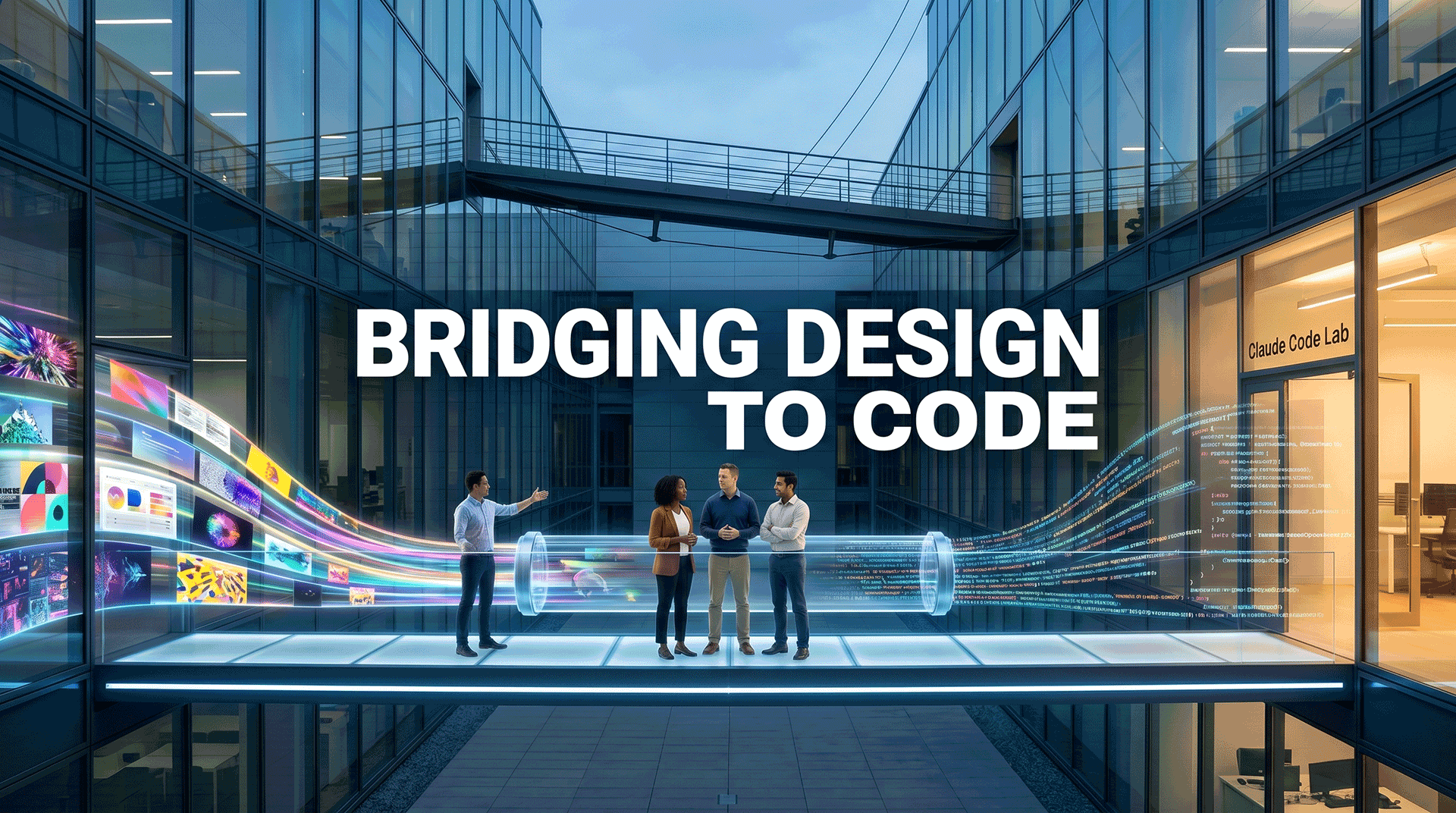
The handoff is where this becomes more than a design story.
The most interesting part of Claude Design is not the prototype. It is what comes after.
I think Anthropic is looking to streamline the entire workflow from idea to implementation. Claude Design is the front end of interacting with the software in a visual manner and then Claude Code does the build out from there.
The handoff from product to design to engineering today is full of translation loss. Screenshots of UIs don’t capture real behavior. PRDs don’t capture all the nuances of a design. Tickets are often written in isolation and lack necessary context. Teams channels get lost in the fog of other conversations. And then, as good engineers do, they ask the questions that should have been answered two weeks earlier.
A richer handoff bundle could help.
Not a screenshot. Not a wall of text. Something more structured, more machine-readable, and closer to implementation intent.
Definitely check out this. Victor Dibia, who develops stuff, somehow managed to cook up a seriously intricate, data-swamped feature for a website. Got it all hooked up, too! The entire feat, thanks to that particular toolchain, took a mere forty-five minutes. That is unbelievable. Typically, weaving in something so darn complex, something that demanding, it just guzzles days. Whole weeks, sometimes.
That kind of time compression is worth watching.
But here is the trap: faster implementation does not make the idea better.
AI builds a dashboard. Fine. But can it possibly decide if that dashboard ought to even be there? No. It just cannot. Does it truly understand if the data is arranged in a way that respects privacy rules and regs? And what about the whispered, tangled organizational politics driving any project? It completely misses them. You can also forget about it reliably spotting the tough, many-faceted performance trade-offs involved.
And it definitely will not tell you that your pet feature is a vanity project wearing a nice jacket.
That job still belongs to humans.
AI speeds up good ideas. It also gives bad ideas cleaner spacing.
Wall Street vs. The Workflow: What Figma's Stock Drop Really Means
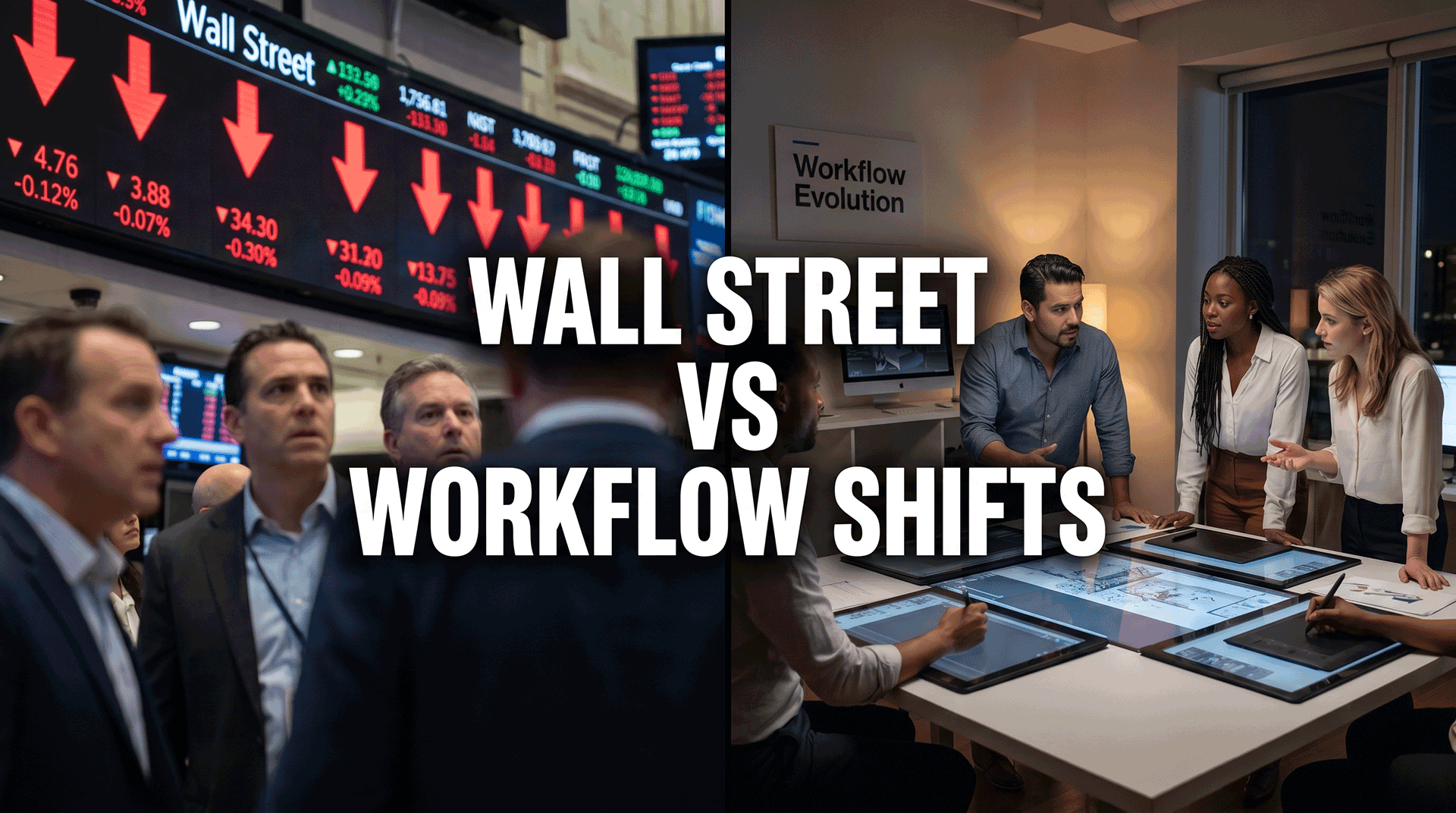
Investors saw a threat to a tool, while practitioners saw a messy change in the workflow.
When Claude Design launched, Wall Street reacted. Figma's stock reportedly fell over 7% on the news and finished the month down 16%.
The easy story was obvious: AI is coming for design tools. But I think that story is oversimplifying it.
Claude Design reshapes our workflow. The blank page problem everyone dreads is gone. What about the rough, clunky PowerPoint mockups you used to throw together? You do not need those anymore. That whole “make this look real” phase is different now.
However, Figma is more than a tool for drawing rectangles. Figma’s greatest strength is in collaboration, in design-system-governance, in plugins etc. All the ways in which design can be shared and used by others. History, comments and the shared context of work in Figma is far more than the sum of individual designs. And then there is the simple fact of teams working together around a canvas of work.
Currently Claude Design does not offer a workflow comparable to that of Figma. Claude Design is not where mature product teams manage design at scale - yet.
The real fight is not Claude Design versus Figma. It is about where product intent lives.
Does it live in a prompt-native AI workflow?
== or ==
Does it live in a collaborative design canvas?
I think Figma enthusiasts get it. They don't just see the pitfalls; they also spot all the amazing chances out there. This amazing connection has been fully embraced, allowing anyone to simply drop Claude Code's output directly into their Figma projects now. Design layers just pop right up.
Here is my take. Do not expect one tool simply to wipe out another. Instead, AI-created content will just be woven by teams into their existing structures for review. That's the core story.
The Leader's Playbook: Piloting Claude Design with Guardrails

Do not give everyone a magic design button and act surprised when the product starts looking haunted.
For technology leaders, the main concern is that those shiny new design tools can create a control mess if not implemented properly. While speed is paramount, preventing raw, unvetted elements from reaching our users remains a challenge. Product teams need to get plenty of creative leeway. It's truly vital. Nonetheless, safeguarding the brand's identity, maintaining impenetrable security, making sure interfaces are accessible to everyone, and building robust engineering foundations are responsibilities we simply cannot overlook.
The answer is not to ban the tool. That rarely works.
The answer is guardrails.
Anthropic's own advice for businesses plays it safe. It's just not active automatically. For enterprise users, this capability comes deactivated by default. Really, someone with a knack for design needs to properly set the system up before others start using it more widely.
A practical adoption checklist I would use:
- Assign clear design-system ownership: Brand and product design leads should configure and validate the design system in Claude Design before broader usage.
- Define approved context: Decide which repos, screenshots, brand assets, and design files can be used. Keep sensitive data out. This is not optional.
- Set review gates: Require human review for usability, accessibility, brand consistency, security, performance, and maintainability before any AI-generated artifact moves toward production.
- Label artifacts clearly: Use labels such as AI-Generated Concept, Design-Reviewed Prototype, and Engineering-Ready Handoff. Teams need to know what they are looking at.
- Watch usage and budget: Claude Design is metered separately from other Claude services.One reviewer from PCWorld burned through 80% of their weekly Pro allowance in just half an hour. That changes the bottleneck. The question becomes: are we spending design tokens on the right problems?
A New Job Description for Everyone
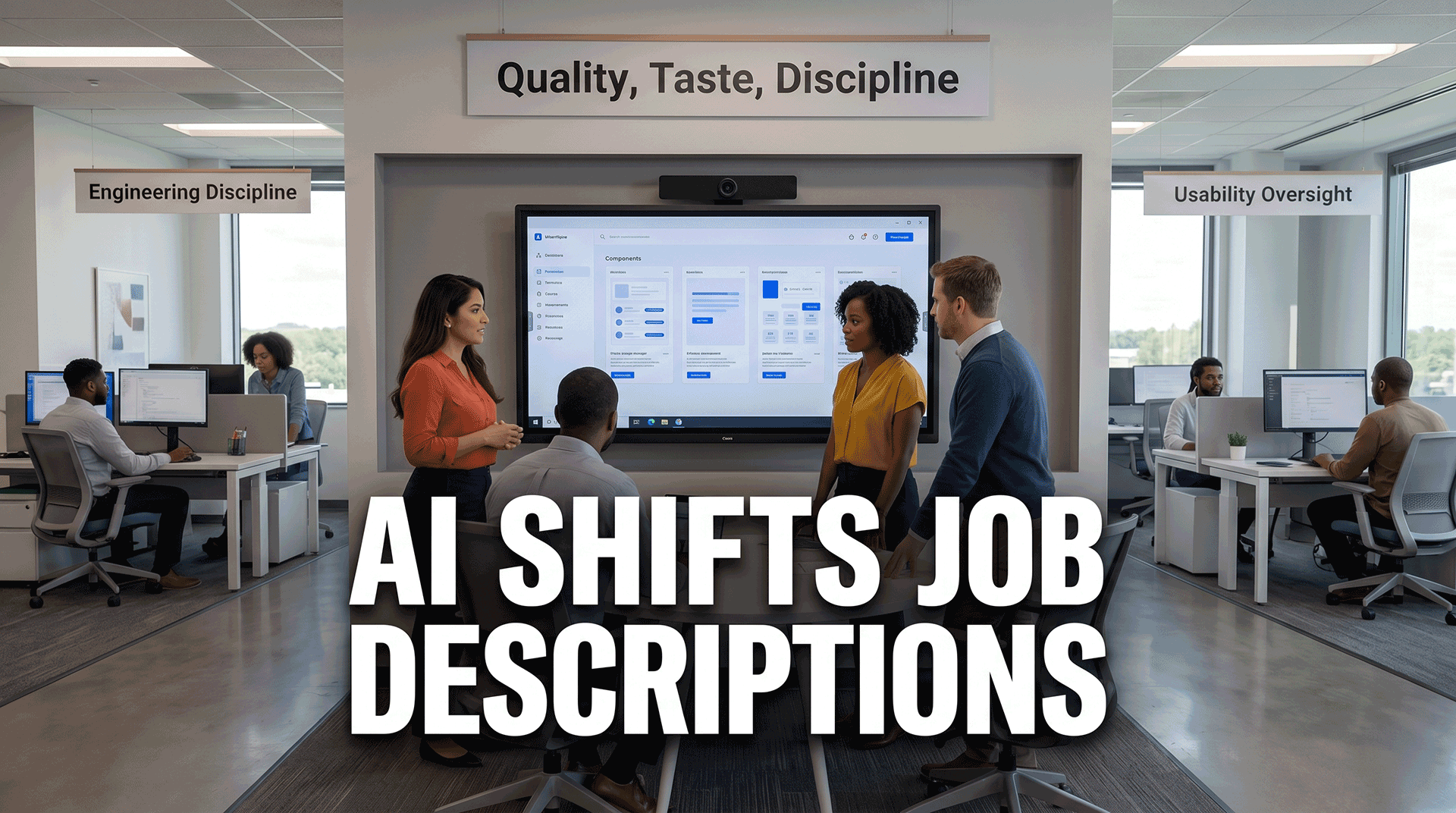
AI does not remove product judgment, design taste, or engineering discipline.
It raises the penalty for lacking them. This workflow shift changes expectations across the product team.
Replacing designers is their absolute nightmare. I totally get it, believe me. But that's the wrong lens entirely. What actually happens? The best work just shifts. It goes way, way upstream. Or, sometimes, it just bursts into new territory. Designers don't get replaced. They become something else. They're the ones running the whole dang show. These folks establish the ultimate standard for what good taste even is. They will scrutinize every interaction. And when it comes down to the final call on quality - that rests squarely with them.
Less time drawing every first draft.
More time defining the grammar of the product.
That is not smaller work. It is bigger work, if the organization respects it.
Product managers, better listen up. This, quite honestly, is a complete paradigm shift, demolishing those tiresome, text-only PRDs we've all been slogging through. It's a genuine leap forward. A real, touchable concept can now be brought to the table by a PM far, far sooner than anyone ever thought possible.
For engineering leaders, the concern is workflow architecture.
AI tools can make development fly. But you know what? They cannot let you just skip the really crucial stuff. Code needs reviewing. Thinking about threats is a big deal. Accessibility testing, ensuring everyone can use what you're building, remains vital. Monitoring actual performance, ease of future fixes, those data contracts, and keeping folks' private information safe: every single one of these things still holds a ton of weight.
The artifact may be generated in seconds.
The accountability is not.
Final Thoughts: The Blank Page Is the First Casualty

The winners will not be the teams that generate fastest, but the teams that learn fastest without losing control.
In my opinion, tools like Claude Design are essential. This directly targets one of the most substantial money pits when you're building anything new. I am talking about the gap between what a lone individual envisions and what the entire team truly grasps.
That gap is real. I have seen it waste months.
Want to go from a rough idea to a working prototype? It means teams often catch their flawed notions, their bad ideas, way earlier than they ever could if they just stuck to endless planning. Meetings get real. Suddenly, even people who do not design get to say what they truly mean. And doesn't that obliterate the whole charade where everyone acts like the product requirements document was some perfect, holy scripture from the very start?
But we should not romanticize it.
These shifts bring their own set of new risks such as design drift, ambiguity around ownership, loss of auditability and pressure to launch things that appear complete but have not been fully vetted.
No, PRDs are not dead. And Figma is not going to die either.
The better takeaway is this: the PRD has lost its monopoly.
Suddenly, everyone can develop a prototype. What a product's even for, its whole reason for existing, can become visual and interactive now. It really ties into the nitty-gritty of how it's made, way more than before. This is one heck of a transformation.
Claude Design's first victim is the blank page.
That may sound modest. It is not.
That dreadful empty screen has eaten up so much of our time and our money. Now, if smart tech can truly hustle us past such a barrier, but we still keep sharp human oversight, well then, count me in.
Citations and Further Reading
- Introducing Claude Design by Anthropic Labs
- Anthropic launches Claude Design, a new product for creating quick visuals
- Honest Review on Claude Design | Kay Space
- https://newsletter.victordibia.com/p/how-good-is-anthropics-claude-design
- Claude Design Review: An Innovative Way to Brainstorm with AI
- Why Figma stock (FIG) dropped over 7% today after Anthropic's Claude Design launch
- Why Figma Stock Fell 16% in April - AOL.com
- Claude Design admin guide for Team and Enterprise plans
- Claude Design subscription usage and pricing
- I tried Claude Design for half an hour. I'm already locked out for a week
- From Claude Code to Figma: Turning Production Code into Editable Figma Designs



Comments ()